Belle II Software development
CDCDedxCosLayerAlgorithm Class Reference

A calibration algorithm for CDC dE/dx electron cos(theta) dependence. More...

#include <CDCDedxCosLayerAlgorithm.h>
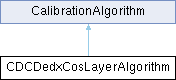
Inheritance diagram for CDCDedxCosLayerAlgorithm:
CalibrationAlgorithm

Public Types

enum  EResult {
  c_OK ,
  c_Iterate ,
  c_NotEnoughData ,
  c_Failure ,
  c_Undefined
}
 The result of calibration. More...
 

Public Member Functions

 CDCDedxCosLayerAlgorithm ()
 Constructor: Sets the description, the properties and the parameters of the algorithm.
 
virtual ~CDCDedxCosLayerAlgorithm ()
 Destructor.
 
void setLayerTrunc (bool value=false)
 function to set truncation method (local vs global)
 
void setMergePayload (bool value=true)
 function to decide merge vs relative gains
 
void setMonitoringPlots (bool value=false)
 function to make flag active for plotting
 
void setMethodSep (bool value=true)
 function to make flag active for method of sep
 
void setUseTruncForInner (bool value=false)
 Enable/disable truncated mean usage for inner superlayers (e.g.
 
void setTrucationBins (double lowedge, double upedge)
 function to set bins of truncation from histogram
 
void setCosineBins (unsigned int value=100)
 function to set number of cosine bins for calibration
 
void setCosineRange (double min=-1.0, double max=1.0)
 function to set min/max range of cosine for calibration
 
void setHistBins (int value=250)
 function to set nbins of dedx dist calibration
 
void setHistRange (double min=0.0, double max=5.0)
 function to set min/max range of dedx dist calibration
 
void setSuffix (const std::string &value)
 adding suffix to control plots
 
unsigned int getRepresentativeLayer (unsigned int igroup) const
 Representative CDC layer for each SL group (used to access group-wise constants): SL0 => 1, SL1 => 9, SL2-8 => 17.
 
void getExpRunInfo ()
 function to get extract calibration run/exp
 
void defineHisto (std::array< std::vector< TH1D * >, m_kNGroups > &hdedx, const std::string &tag, const std::string &chargeLabel)
 function to define dE/dx histograms
 
TH1D * defineCosthHist (const std::string &tag, const std::string &chargeLabel)
 function to define cosine histograms
 
void getTruncatedBins (TH1D *hist, int &binlow, int &binhigh)
 function to get bins of truncation from histogram
 
double getTruncationMean (TH1D *hist, int binlow, int binhigh)
 function to get truncated mean
 
double extractCosMean (TH1D *&hist, int fixedLow=1, int fixedHigh=1)
 Extract mean dE/dx vs costh for a given group from the histogram.
 
void createPayload ()
 function to store new payload after full calibration
 
void plotdedxHist (std::array< std::vector< TH1D * >, m_kNGroups > &hdedx, const std::string &tag)
 function to draw the dE/dx histogram in costh bins
 
void plotLayerDist (std::array< TH1D *, m_kNGroups > &hdedxlay, int iter)
 function to draw dedx dist.
 
void plotQaPars (TH1D *hCosth_all, TH1D *hCosth_pos, TH1D *hCosth_neg)
 function to costh distribution for Inner/Outer layer
 
void plotRelConst (const std::array< std::vector< double >, m_kNGroups > &cosine, int iter)
 Plot relative calibration constants vs costh for all SL groups (overlayed)
 
void plotmeanChargeOverlay (const std::array< std::vector< double >, 3 > &cosine_pos, const std::string &sltag, int iter)
 Plot overlay of positive, negative, and average cosine means for one SL group.
 
void plotConstants ()
 function to draw the old/new final constants
 
void plotEventStats ()
 function to draw the stats plots
 
const std::string & getPrefix () const
 Get the prefix used for getting calibration data.
 
const std::string & getCollectorName () const
 Alias for prefix.
 
void setPrefix (const std::string &prefix)
 Set the prefix used to identify datastore objects.
 
void setInputFileNames (PyObject *inputFileNames)
 Set the input file names used for this algorithm from a Python list.
 
PyObject * getInputFileNames ()
 Get the input file names used for this algorithm and pass them out as a Python list of unicode strings.
 
std::vector< Calibration::ExpRun > getRunListFromAllData () const
 Get the complete list of runs from inspection of collected data.
 
RunRange getRunRangeFromAllData () const
 Get the complete RunRange from inspection of collected data.
 
IntervalOfValidity getIovFromAllData () const
 Get the complete IoV from inspection of collected data.
 
void fillRunToInputFilesMap ()
 Fill the mapping of ExpRun -> Files.
 
const std::string & getGranularity () const
 Get the granularity of collected data.
 
EResult execute (std::vector< Calibration::ExpRun > runs={}, int iteration=0, IntervalOfValidity iov=IntervalOfValidity())
 Runs calibration over vector of runs for a given iteration.
 
EResult execute (PyObject *runs, int iteration=0, IntervalOfValidity iov=IntervalOfValidity())
 Runs calibration over Python list of runs. Converts to C++ and then calls the other execute() function.
 
std::list< Database::DBImportQuery > & getPayloads ()
 Get constants (in TObjects) for database update from last execution.
 
const std::list< Database::DBImportQuery > & getPayloadValues () const
 Get constants (in TObjects) for database update from last execution.
 
bool commit ()
 Submit constants from last calibration into database.
 
bool commit (std::list< Database::DBImportQuery > payloads)
 Submit constants from a (potentially previous) set of payloads.
 
const std::string & getDescription () const
 Get the description of the algorithm (set by developers in constructor)
 
bool loadInputJson (const std::string &jsonString)
 Load the m_inputJson variable from a string (useful from Python interface). The return bool indicates success or failure.
 
const std::string dumpOutputJson () const
 Dump the JSON string of the output JSON object.
 
const std::vector< Calibration::ExpRun > findPayloadBoundaries (std::vector< Calibration::ExpRun > runs, int iteration=0)
 Used to discover the ExpRun boundaries that you want the Python CAF to execute on. This is optional and only used in some.
 
template<>
std::shared_ptr< TTree > getObjectPtr (const std::string &name, const std::vector< Calibration::ExpRun > &requestedRuns)
 Specialization of getObjectPtr<TTree>.
 

Static Public Member Functions

static bool checkPyExpRun (PyObject *pyObj)
 Checks that a PyObject can be successfully converted to an ExpRun type.
 
static Calibration::ExpRun convertPyExpRun (PyObject *pyObj)
 Performs the conversion of PyObject to ExpRun.
 

Static Public Attributes

static constexpr int m_kNGroups = 3
 SL grouping: inner (SL0), middle (SL1), outer (SL2–8)
 

Protected Member Functions

virtual EResult calibrate () override
 Cosine algorithm.
 
void setInputFileNames (const std::vector< std::string > &inputFileNames)
 Set the input file names used for this algorithm.
 
virtual bool isBoundaryRequired (const Calibration::ExpRun &)
 Given the current collector data, make a decision about whether or not this run should be the start of a payload boundary.
 
virtual void boundaryFindingSetup (std::vector< Calibration::ExpRun >, int)
 If you need to make some changes to your algorithm class before 'findPayloadBoundaries' is run, make them in this function.
 
virtual void boundaryFindingTearDown ()
 Put your algorithm back into a state ready for normal execution if you need to.
 
const std::vector< Calibration::ExpRun > & getRunList () const
 Get the list of runs for which calibration is called.
 
int getIteration () const
 Get current iteration.
 
const std::vector< std::string > & getVecInputFileNames () const
 Get the input file names used for this algorithm as a STL vector.
 
template<class T>
std::shared_ptr< T > getObjectPtr (const std::string &name, const std::vector< Calibration::ExpRun > &requestedRuns)
 Get calibration data object by name and list of runs, the Merge function will be called to generate the overall object.
 
template<class T>
std::shared_ptr< T > getObjectPtr (std::string name)
 Get calibration data object (for all runs the calibration is requested for) This function will only work during or after execute() has been called once.
 
template<>
shared_ptr< TTree > getObjectPtr (const string &name, const vector< ExpRun > &requestedRuns)
 We cheekily cast the TChain to TTree for the returned pointer so that the user never knows Hopefully this doesn't cause issues if people do low level stuff to the tree...
 
std::string getGranularityFromData () const
 Get the granularity of collected data.
 
void saveCalibration (TClonesArray *data, const std::string &name)
 Store DBArray payload with given name with default IOV.
 
void saveCalibration (TClonesArray *data, const std::string &name, const IntervalOfValidity &iov)
 Store DBArray with given name and custom IOV.
 
void saveCalibration (TObject *data)
 Store DB payload with default name and default IOV.
 
void saveCalibration (TObject *data, const IntervalOfValidity &iov)
 Store DB payload with default name and custom IOV.
 
void saveCalibration (TObject *data, const std::string &name)
 Store DB payload with given name with default IOV.
 
void saveCalibration (TObject *data, const std::string &name, const IntervalOfValidity &iov)
 Store DB payload with given name and custom IOV.
 
void setDescription (const std::string &description)
 Set algorithm description (in constructor)
 
void clearCalibrationData ()
 Clear calibration data.
 
void resetInputJson ()
 Clears the m_inputJson member variable.
 
void resetOutputJson ()
 Clears the m_outputJson member variable.
 
template<class T>
void setOutputJsonValue (const std::string &key, const T &value)
 Set a key:value pair for the outputJson object, expected to used internally during calibrate()
 
template<class T>
const T getOutputJsonValue (const std::string &key) const
 Get a value using a key from the JSON output object, not sure why you would want to do this.
 
template<class T>
const T getInputJsonValue (const std::string &key) const
 Get an input JSON value using a key. The normal exceptions are raised when the key doesn't exist.
 
const nlohmann::json & getInputJsonObject () const
 Get the entire top level JSON object. We explicitly say this must be of object type so that we might pick.
 
bool inputJsonKeyExists (const std::string &key) const
 Test for a key in the input JSON object.
 

Static Protected Member Functions

static void updateDBObjPtrs (const unsigned int event, const int run, const int experiment)
 Updates any DBObjPtrs by calling update(event) for DBStore.
 
static Calibration::ExpRun getAllGranularityExpRun ()
 Returns the Exp,Run pair that means 'Everything'. Currently unused.
 

Protected Attributes

std::vector< Calibration::ExpRun > m_boundaries
 When using the boundaries functionality from isBoundaryRequired, this is used to store the boundaries. It is cleared when.
 

Private Member Functions

std::string getExpRunString (Calibration::ExpRun &expRun) const
 Gets the "exp.run" string repr. of (exp,run)
 
std::string getFullObjectPath (const std::string &name, Calibration::ExpRun expRun) const
 constructs the full TDirectory + Key name of an object in a TFile based on its name and exprun
 

Private Attributes

bool isMethodSep
 if e+e- need to be consider sep
 
bool isMakePlots
 produce plots for status
 
bool isMerge
 merge payload at the of calibration
 
bool isFixTrunc
 true = fix window for all out/inner layers
 
bool isUseTrunc
 true if truncated mean for SL0,1
 
double m_truncMin
 lower threshold on truncation
 
double m_truncMax
 upper threshold on truncation
 
unsigned int m_cosBin
 number of bins across cosine range
 
double m_cosMin
 min cosine angle for cal
 
double m_cosMax
 max cosine angle for cal
 
int m_dedxBin
 number of bins for dedx histogram
 
double m_dedxMin
 min dedx range for gain cal
 
double m_dedxMax
 max dedx range for gain cal
 
std::string m_suffix
 add suffix to all plot name
 
std::string m_runExp
 add run and exp to title of plot
 
const std::array< std::string, m_kNGroupsm_label = {"SL0", "SL1", "SL2-8"}
 add inner/outer superlayer label
 
std::vector< std::vector< double > > m_coscors
 final vectors of calibration
 
DBObjPtr< CDCDedxCosineCorm_DBCosineCor
 Electron saturation correction DB object.
 
std::vector< std::string > m_inputFileNames
 List of input files to the Algorithm, will initially be user defined but then gets the wildcards expanded during execute()
 
std::map< Calibration::ExpRun, std::vector< std::string > > m_runsToInputFiles
 Map of Runs to input files. Gets filled when you call getRunRangeFromAllData, gets cleared when setting input files again.
 
std::string m_granularityOfData
 Granularity of input data. This only changes when the input files change so it isn't specific to an execution.
 
ExecutionData m_data
 Data specific to a SINGLE execution of the algorithm. Gets reset at the beginning of execution.
 
std::string m_description {""}
 Description of the algorithm.
 
std::string m_prefix {""}
 The name of the TDirectory the collector objects are contained within.
 
nlohmann::json m_jsonExecutionInput = nlohmann::json::object()
 Optional input JSON object used to make decisions about how to execute the algorithm code.
 
nlohmann::json m_jsonExecutionOutput = nlohmann::json::object()
 Optional output JSON object that can be set during the execution by the underlying algorithm code.
 

Static Private Attributes

static const Calibration::ExpRun m_allExpRun = make_pair(-1, -1)
 allExpRun
 

Detailed Description

A calibration algorithm for CDC dE/dx electron cos(theta) dependence.

Definition at line 28 of file CDCDedxCosLayerAlgorithm.h.

Member Enumeration Documentation

◆ EResult

enum EResult
inherited

The result of calibration.

Enumerator
c_OK 

Finished successfully =0 in Python.

c_Iterate 

Needs iteration =1 in Python.

c_NotEnoughData 

Needs more data =2 in Python.

c_Failure 

Failed =3 in Python.

c_Undefined 

Not yet known (before execution) =4 in Python.

Definition at line 40 of file CalibrationAlgorithm.h.

40 {
41 c_OK,
42 c_Iterate,
43 c_NotEnoughData,
44 c_Failure,
45 c_Undefined
46 };

Constructor & Destructor Documentation

◆ CDCDedxCosLayerAlgorithm()

Constructor: Sets the description, the properties and the parameters of the algorithm.

Definition at line 21 of file CDCDedxCosLayerAlgorithm.cc.

21 :
22 CalibrationAlgorithm("CDCDedxElectronCollector"),
23 isMethodSep(true),
24 isMakePlots(true),
25 isMerge(true),
26 isFixTrunc(false),
27 isUseTrunc(false),
28 m_truncMin(0.05),
29 m_truncMax(0.75),
30 m_cosBin(100),
31 m_cosMin(-1.0),
32 m_cosMax(1.0),
33 m_dedxBin(250),
34 m_dedxMin(0.0),
35 m_dedxMax(5.0),
36 m_suffix("")
37{
38 // Set module properties
39 setDescription("A calibration algorithm for CDC dE/dx electron cos(theta) dependence");
40
41}
double m_truncMax
upper threshold on truncation
double m_truncMin
lower threshold on truncation
int m_dedxBin
number of bins for dedx histogram
double m_cosMax
max cosine angle for cal
std::string m_suffix
add suffix to all plot name
bool isFixTrunc
true = fix window for all out/inner layers
double m_cosMin
min cosine angle for cal
bool isMethodSep
if e+e- need to be consider sep
double m_dedxMax
max dedx range for gain cal
bool isMakePlots
produce plots for status
bool isMerge
merge payload at the of calibration
bool isUseTrunc
true if truncated mean for SL0,1
double m_dedxMin
min dedx range for gain cal
unsigned int m_cosBin
number of bins across cosine range
void setDescription(const std::string &description)
Set algorithm description (in constructor)
CalibrationAlgorithm(const std::string &collectorModuleName)
Constructor - sets the prefix for collected objects (won't be accesses until execute(....

◆ ~CDCDedxCosLayerAlgorithm()

virtual ~CDCDedxCosLayerAlgorithm ( )
inlinevirtual

Destructor.

Definition at line 42 of file CDCDedxCosLayerAlgorithm.h.

42{}

Member Function Documentation

◆ boundaryFindingSetup()

virtual void boundaryFindingSetup ( std::vector< Calibration::ExpRun > ,
int  )
inlineprotectedvirtualinherited

If you need to make some changes to your algorithm class before 'findPayloadBoundaries' is run, make them in this function.

Reimplemented in PXDAnalyticGainCalibrationAlgorithm, PXDValidationAlgorithm, SVD3SampleCoGTimeCalibrationAlgorithm, SVD3SampleELSTimeCalibrationAlgorithm, SVDCoGTimeCalibrationAlgorithm, TestBoundarySettingAlgorithm, and TestCalibrationAlgorithm.

Definition at line 252 of file CalibrationAlgorithm.h.

252{};

◆ boundaryFindingTearDown()

virtual void boundaryFindingTearDown ( )
inlineprotectedvirtualinherited

Put your algorithm back into a state ready for normal execution if you need to.

Definition at line 257 of file CalibrationAlgorithm.h.

257{};

◆ calibrate()

CalibrationAlgorithm::EResult calibrate ( )
overrideprotectedvirtual

Cosine algorithm.

Implements CalibrationAlgorithm.

Definition at line 46 of file CDCDedxCosLayerAlgorithm.cc.

47{
48
50
51 if (!m_DBCosineCor.isValid())
52 B2FATAL("There is no valid previous payload for CDCDedxCosineCor");
53
54 B2INFO("Preparing dE/dx calibration for CDC dE/dx electron saturation");
55
56 // Get data objects
57 auto ttree = getObjectPtr<TTree>("tree");
58 if (ttree->GetEntries() < 100)return c_NotEnoughData;
59
60 std::vector<double>* lDedx = nullptr;
61 std::vector<int>* lLayer = nullptr;
62 double costh = 0.0;
63 int charge = 0;
64
65 ttree->SetBranchAddress("ldedx", &lDedx);
66 ttree->SetBranchAddress("lLayer", &lLayer);
67 ttree->SetBranchAddress("costh", &costh);
68 ttree->SetBranchAddress("charge", &charge);
69
70 // fill histograms, bin size may be arbitrary
71 TH1D* hCosth_neg = defineCosthHist("neg", "e-");
72 TH1D* hCosth_pos = defineCosthHist("pos", "e+");
73 TH1D* hCosth_all = defineCosthHist("all", "e-,e+");
74
75 std::array<std::vector<double>, m_kNGroups> corrFactor;
76
77 for (int ig = 0; ig < m_kNGroups; ig++) {
78 corrFactor[ig].assign(m_cosBin, 1.0);
79 }
80
81 for (int iter = 0; iter < 3; iter++) {
82 // make histograms to store dE/dx values in bins of cos(theta)
83 // bin size can be arbitrary, but for now just make uniform bins
84 std::array<std::vector<TH1D*>, m_kNGroups> hDedxCos_neg;
85 std::array<std::vector<TH1D*>, m_kNGroups> hDedxCos_pos;
86 std::array<std::vector<TH1D*>, m_kNGroups> hDedxCos_all;
87
88 defineHisto(hDedxCos_neg, Form("neg_iter%d", iter), "e-");
89 defineHisto(hDedxCos_pos, Form("pos_iter%d", iter), "e+");
90 defineHisto(hDedxCos_all, Form("all_iter%d", iter), "e-,e+");
91
92 std::array<TH1D*, m_kNGroups> hDedxGroup{};
93 for (int il = 0; il < m_kNGroups; il++) {
94 std::string title = Form("dedxhit dist (%s); dedxhit;entries", m_label[il].data());
95 hDedxGroup[il] = new TH1D(Form("hDedxGroup_%s_%s_iter%d", m_label[il].data(), m_suffix.data(), iter), "", m_dedxBin, m_dedxMin,
96 m_dedxMax);
97 hDedxGroup[il]->SetTitle(title.c_str());
98 }
99
100 const double binW = (m_cosMax - m_cosMin) / m_cosBin;
101
102 for (int i = 0; i < ttree->GetEntries(); ++i) {
103
104 ttree->GetEvent(i);
105
106 if (!lDedx || !lLayer) continue;
107 if (lDedx->size() != lLayer->size()) continue;
108 if (charge == 0) continue;
109
110 if (costh < TMath::Cos(150 * TMath::DegToRad()) ||
111 costh > TMath::Cos(17 * TMath::DegToRad())) continue;
112
113 int bin = int((costh - m_cosMin) / binW);
114 if (bin < 0 || bin >= int(m_cosBin)) continue;
115
116 for (size_t j = 0; j < lDedx->size(); ++j) {
117
118 double val = lDedx->at(j);
119 int lay = lLayer->at(j);
120
121 if (val <= 0) continue;
122
123 int ig = (lay < 8) ? 0 : ((lay < 14) ? 1 : 2);
124
125 val /= corrFactor[ig][bin];
126
127 if (isMethodSep) {
128 if (charge < 0)
129 hDedxCos_neg[ig][bin]->Fill(val);
130 else if (charge > 0)
131 hDedxCos_pos[ig][bin]->Fill(val);
132
133 }
134 hDedxCos_all[ig][bin]->Fill(val);
135
136 hDedxGroup[ig]->Fill(val);
137
138 }
139 if (iter == 0) {
140 // costh histo
141 if (isMethodSep) {
142 if (charge < 0) hCosth_neg->Fill(costh);
143 else if (charge > 0) hCosth_pos->Fill(costh);
144 }
145 hCosth_all->Fill(costh);
146 }
147 }
148
149 std::array<std::vector<double>, m_kNGroups> cosine;
150
151 for (int il = 0; il < m_kNGroups; ++il) {
152
153 int minGroup = 0, maxGroup = 0;
154 std::vector<double> vmean_neg, vmean_pos;
155
156 if (isFixTrunc && isUseTrunc) {
157 getTruncatedBins(hDedxGroup[il], minGroup, maxGroup);
158 hDedxGroup[il]->SetTitle(
159 Form("%s;%d;%d", hDedxGroup[il]->GetTitle(), minGroup, maxGroup));
160 }
161
162 cosine[il].reserve(m_cosBin);
163
164 for (unsigned int ibin = 0; ibin < m_cosBin; ++ibin) {
165
166 double mean = 1.0;
167
168 if (isMethodSep) {
169
170 double mean_neg = extractCosMean(hDedxCos_neg[il][ibin], minGroup, maxGroup);
171 double mean_pos = extractCosMean(hDedxCos_pos[il][ibin], minGroup, maxGroup);
172
173 bool has_neg = (hDedxCos_neg[il][ibin]->Integral() > 0);
174 bool has_pos = (hDedxCos_pos[il][ibin]->Integral() > 0);
175
176 if (has_neg && has_pos) mean = 0.5 * (mean_neg + mean_pos);
177 else if (has_neg) mean = mean_neg;
178 else if (has_pos) mean = mean_pos;
179 vmean_neg.push_back(mean_neg);
180 vmean_pos.push_back(mean_pos);
181
182 } else {
183 mean = extractCosMean(hDedxCos_all[il][ibin], minGroup, maxGroup);
184 }
185
186 cosine[il].push_back(mean);
187 if (mean > 0) corrFactor[il][ibin] *= (mean / 1.25);
188 }
189 if (isMethodSep) {
190 std::array<std::vector<double>, 3> cosMeanSets = {vmean_neg, vmean_pos, cosine[il]};
191 plotmeanChargeOverlay(cosMeanSets, m_label[il], iter);
192 }
193 }
194
195
196 if (isMakePlots) {
197
198 //1. dE/dx dist. for cosine bins
199
200 if (isMethodSep) {
201 plotdedxHist(hDedxCos_neg, Form("neg_iter%d", iter));
202 plotdedxHist(hDedxCos_pos, Form("pos_iter%d", iter));
203 }
204 plotdedxHist(hDedxCos_all, Form("all_iter%d", iter));
205
206 //3. Inner and Outer layer dE/dx distributions
207 plotLayerDist(hDedxGroup, iter);
208
209 //5. draw the relative constants
210 plotRelConst(corrFactor, iter);
211 }
212
213 }
214
215 for (int il = 0; il < m_kNGroups; ++il)
216 m_coscors.push_back(corrFactor[il]);
217
219
220 if (isMakePlots) {
221 //4. costh distribution
222 plotQaPars(hCosth_all, hCosth_pos, hCosth_neg);
223
224 //6. draw the final constants
226
227 //7. plot statistics related plots here
229
230 }
231
232 m_suffix.clear();
233
234 return c_OK;
235}
void plotdedxHist(std::array< std::vector< TH1D * >, m_kNGroups > &hdedx, const std::string &tag)
function to draw the dE/dx histogram in costh bins
void plotRelConst(const std::array< std::vector< double >, m_kNGroups > &cosine, int iter)
Plot relative calibration constants vs costh for all SL groups (overlayed)
void plotQaPars(TH1D *hCosth_all, TH1D *hCosth_pos, TH1D *hCosth_neg)
function to costh distribution for Inner/Outer layer
void plotLayerDist(std::array< TH1D *, m_kNGroups > &hdedxlay, int iter)
function to draw dedx dist.
void getTruncatedBins(TH1D *hist, int &binlow, int &binhigh)
function to get bins of truncation from histogram
void defineHisto(std::array< std::vector< TH1D * >, m_kNGroups > &hdedx, const std::string &tag, const std::string &chargeLabel)
function to define dE/dx histograms
void getExpRunInfo()
function to get extract calibration run/exp
static constexpr int m_kNGroups
SL grouping: inner (SL0), middle (SL1), outer (SL2–8)
void plotmeanChargeOverlay(const std::array< std::vector< double >, 3 > &cosine_pos, const std::string &sltag, int iter)
Plot overlay of positive, negative, and average cosine means for one SL group.
TH1D * defineCosthHist(const std::string &tag, const std::string &chargeLabel)
function to define cosine histograms
double extractCosMean(TH1D *&hist, int fixedLow=1, int fixedHigh=1)
Extract mean dE/dx vs costh for a given group from the histogram.
DBObjPtr< CDCDedxCosineCor > m_DBCosineCor
Electron saturation correction DB object.
void plotConstants()
function to draw the old/new final constants
const std::array< std::string, m_kNGroups > m_label
add inner/outer superlayer label
void plotEventStats()
function to draw the stats plots
void createPayload()
function to store new payload after full calibration
std::vector< std::vector< double > > m_coscors
final vectors of calibration
@ c_OK
Finished successfully =0 in Python.
@ c_NotEnoughData
Needs more data =2 in Python.
std::shared_ptr< T > getObjectPtr(const std::string &name, const std::vector< Calibration::ExpRun > &requestedRuns)
Get calibration data object by name and list of runs, the Merge function will be called to generate t...

◆ checkPyExpRun()

bool checkPyExpRun ( PyObject * pyObj)
staticinherited

Checks that a PyObject can be successfully converted to an ExpRun type.

Checks if the PyObject can be converted to ExpRun.

Definition at line 28 of file CalibrationAlgorithm.cc.

29{
30 // Is it a sequence?
31 if (PySequence_Check(pyObj)) {
32 Py_ssize_t nObj = PySequence_Length(pyObj);
33 // Does it have 2 objects in it?
34 if (nObj != 2) {
35 B2DEBUG(29, "ExpRun was a Python sequence which didn't have exactly 2 entries!");
36 return false;
37 }
38 PyObject* item1, *item2;
39 item1 = PySequence_GetItem(pyObj, 0);
40 item2 = PySequence_GetItem(pyObj, 1);
41 // Did the GetItem work?
42 if ((item1 == NULL) || (item2 == NULL)) {
43 B2DEBUG(29, "A PyObject pointer was NULL in the sequence");
44 return false;
45 }
46 // Are they longs?
47 if (PyLong_Check(item1) && PyLong_Check(item2)) {
48 long value1, value2;
49 value1 = PyLong_AsLong(item1);
50 value2 = PyLong_AsLong(item2);
51 if (((value1 == -1) || (value2 == -1)) && PyErr_Occurred()) {
52 B2DEBUG(29, "An error occurred while converting the PyLong to long");
53 return false;
54 }
55 } else {
56 B2DEBUG(29, "One or more of the PyObjects in the ExpRun wasn't a long");
57 return false;
58 }
59 // Make sure to kill off the reference GetItem gave us responsibility for
60 Py_DECREF(item1);
61 Py_DECREF(item2);
62 } else {
63 B2DEBUG(29, "ExpRun was not a Python sequence.");
64 return false;
65 }
66 return true;
67}

◆ clearCalibrationData()

void clearCalibrationData ( )
inlineprotectedinherited

Clear calibration data.

Definition at line 324 of file CalibrationAlgorithm.h.

324{m_data.clearCalibrationData();}

◆ commit() [1/2]

bool commit ( )
inherited

Submit constants from last calibration into database.

Definition at line 302 of file CalibrationAlgorithm.cc.

303{
304 if (getPayloads().empty())
305 return false;
306 list<Database::DBImportQuery> payloads = getPayloads();
307 B2INFO("Committing " << payloads.size() << " payloads to database.");
308 return Database::Instance().storeData(payloads);
309}
std::list< Database::DBImportQuery > & getPayloads()
Get constants (in TObjects) for database update from last execution.
static Database & Instance()
Instance of a singleton Database.
Definition Database.cc:41
bool storeData(const std::string &name, TObject *object, const IntervalOfValidity &iov)
Store an object in the database.
Definition Database.cc:140

◆ commit() [2/2]

bool commit ( std::list< Database::DBImportQuery > payloads)
inherited

Submit constants from a (potentially previous) set of payloads.

Definition at line 312 of file CalibrationAlgorithm.cc.

313{
314 if (payloads.empty())
315 return false;
316 return Database::Instance().storeData(payloads);
317}

◆ convertPyExpRun()

ExpRun convertPyExpRun ( PyObject * pyObj)
staticinherited

Performs the conversion of PyObject to ExpRun.

Converts the PyObject to an ExpRun. We've preoviously checked the object so this assumes a lot about the PyObject.

Definition at line 70 of file CalibrationAlgorithm.cc.

71{
72 ExpRun expRun;
73 PyObject* itemExp, *itemRun;
74 itemExp = PySequence_GetItem(pyObj, 0);
75 itemRun = PySequence_GetItem(pyObj, 1);
76 expRun.first = PyLong_AsLong(itemExp);
77 Py_DECREF(itemExp);
78 expRun.second = PyLong_AsLong(itemRun);
79 Py_DECREF(itemRun);
80 return expRun;
81}

◆ createPayload()

void createPayload ( )

function to store new payload after full calibration

Definition at line 299 of file CDCDedxCosLayerAlgorithm.cc.

300{
301
302 for (unsigned int il = 0; il < m_kNGroups; il++) {
303 if (isMerge) {
304 unsigned int nbins = m_DBCosineCor->getSize(getRepresentativeLayer(il));
305 if (nbins != m_cosBin)
306 B2ERROR("merging failed because of unmatch bins (old " << m_cosBin << " new " << nbins << ")");
307
308 for (unsigned int ibin = 0; ibin < nbins; ibin++) {
309 double prev = m_DBCosineCor->getMean(getRepresentativeLayer(il), ibin);
310 B2INFO("Cosine Corr for " << m_label[il] << " Bin # " << ibin << ", Previous = " << prev << ", Relative = " << m_coscors[il][ibin]
311 << ", Merged = " << prev * m_coscors[il][ibin]);
312 m_coscors[il][ibin] *= prev;
313
314 }
315 }
316 }
317
318 //Saving constants
319 B2INFO("dE/dx calibration done for CDC dE/dx _eltron saturation");
320
321 std::vector<unsigned int> layerToGroup(56);
322
323 for (unsigned int layer = 0; layer < 56; layer++) {
324 if (layer < 8) layerToGroup[layer] = 0; // SL0
325 else if (layer < 14) layerToGroup[layer] = 1; // SL1
326 else layerToGroup[layer] = 2; // SL2-8
327 }
328
329 CDCDedxCosineCor* gain = new CDCDedxCosineCor(m_coscors, layerToGroup);
330 saveCalibration(gain, "CDCDedxCosineCor");
331}
unsigned int getRepresentativeLayer(unsigned int igroup) const
Representative CDC layer for each SL group (used to access group-wise constants): SL0 => 1,...
void saveCalibration(TClonesArray *data, const std::string &name)
Store DBArray payload with given name with default IOV.

◆ defineCosthHist()

TH1D * defineCosthHist ( const std::string & tag,
const std::string & chargeLabel )

function to define cosine histograms

Definition at line 263 of file CDCDedxCosLayerAlgorithm.cc.

264{
265
266 TH1D* hist = new TH1D(Form("hCosth_%s_%s", tag.c_str(), m_suffix.data()), " ", m_cosBin, m_cosMin, m_cosMax);
267 hist->SetTitle(Form("cos(#theta) dist (%s); cos(#theta); Entries", chargeLabel.c_str()));
268
269 return hist;
270}

◆ defineHisto()

void defineHisto ( std::array< std::vector< TH1D * >, m_kNGroups > & hdedx,
const std::string & tag,
const std::string & chargeLabel )

function to define dE/dx histograms

Definition at line 273 of file CDCDedxCosLayerAlgorithm.cc.

275{
276
277 const double binW = (m_cosMax - m_cosMin) / m_cosBin;
278
279 for (int il = 0; il < m_kNGroups; il++) {
280 hdedx[il].reserve(m_cosBin);
281
282 for (unsigned int i = 0; i < m_cosBin; ++i) {
283 double coslow = i * binW + m_cosMin;
284 double coshigh = coslow + binW;
285
286 hdedx[il].push_back(new TH1D(Form("hDedxCos_%s_g%d_bin%d_%s", tag.c_str(), il, i, m_suffix.data()),
288
289 hdedx[il][i]->SetTitle(Form("%s dE/dx dist (%s) in costh (%0.02f, %0.02f)",
290 m_label[il].c_str(), chargeLabel.c_str(), coslow, coshigh));
291
292 // hdedx[il][i]->GetXaxis()->SetTitle("dE/dx");
293 // hdedx[il][i]->GetYaxis()->SetTitle("Entries");
294 }
295 }
296}

◆ dumpOutputJson()

const std::string dumpOutputJson ( ) const
inlineinherited

Dump the JSON string of the output JSON object.

Definition at line 223 of file CalibrationAlgorithm.h.

223{return m_jsonExecutionOutput.dump();}

◆ execute() [1/2]

CalibrationAlgorithm::EResult execute ( PyObject * runs,
int iteration = 0,
IntervalOfValidity iov = IntervalOfValidity() )
inherited

Runs calibration over Python list of runs. Converts to C++ and then calls the other execute() function.

Definition at line 83 of file CalibrationAlgorithm.cc.

84{
85 B2DEBUG(29, "Running execute() using Python Object as input argument");
86 // Reset the execution specific data in case the algorithm was previously called
87 m_data.reset();
88 m_data.setIteration(iteration);
89 vector<ExpRun> vecRuns;
90 // Is it a list?
91 if (PySequence_Check(runs)) {
92 boost::python::handle<> handle(boost::python::borrowed(runs));
93 boost::python::list listRuns(handle);
94
95 int nList = boost::python::len(listRuns);
96 for (int iList = 0; iList < nList; ++iList) {
97 boost::python::object pyExpRun(listRuns[iList]);
98 if (!checkPyExpRun(pyExpRun.ptr())) {
99 B2ERROR("Received Python ExpRuns couldn't be converted to C++");
100 m_data.setResult(c_Failure);
101 return c_Failure;
102 } else {
103 vecRuns.push_back(convertPyExpRun(pyExpRun.ptr()));
104 }
105 }
106 } else {
107 B2ERROR("Tried to set the input runs but we didn't receive a Python sequence object (list,tuple).");
108 m_data.setResult(c_Failure);
109 return c_Failure;
110 }
111 return execute(vecRuns, iteration, iov);
112}
static bool checkPyExpRun(PyObject *pyObj)
Checks that a PyObject can be successfully converted to an ExpRun type.
EResult execute(std::vector< Calibration::ExpRun > runs={}, int iteration=0, IntervalOfValidity iov=IntervalOfValidity())
Runs calibration over vector of runs for a given iteration.
static Calibration::ExpRun convertPyExpRun(PyObject *pyObj)
Performs the conversion of PyObject to ExpRun.
ExecutionData m_data
Data specific to a SINGLE execution of the algorithm. Gets reset at the beginning of execution.

◆ execute() [2/2]

CalibrationAlgorithm::EResult execute ( std::vector< Calibration::ExpRun > runs = {},
int iteration = 0,
IntervalOfValidity iov = IntervalOfValidity() )
inherited

Runs calibration over vector of runs for a given iteration.

You can also specify the IoV to save the database payload as. By default the Algorithm will create an IoV from your requested ExpRuns, or from the overall ExpRuns of the input data if you haven't specified ExpRuns in this function.

No checks are performed to make sure that a IoV you specify matches the data you ran over, it simply labels the IoV to commit to the database later.

Definition at line 114 of file CalibrationAlgorithm.cc.

115{
116 // Check if we are calling this function directly and need to reset, or through Python where it was already done.
117 if (m_data.getResult() != c_Undefined) {
118 m_data.reset();
119 m_data.setIteration(iteration);
120 }
121
122 if (m_inputFileNames.empty()) {
123 B2ERROR("There aren't any input files set. Please use CalibrationAlgorithm::setInputFiles()");
124 m_data.setResult(c_Failure);
125 return c_Failure;
126 }
127
128 // Did we receive runs to execute over explicitly?
129 if (!(runs.empty())) {
130 for (auto expRun : runs) {
131 B2DEBUG(29, "ExpRun requested = (" << expRun.first << ", " << expRun.second << ")");
132 }
133 // We've asked explicitly for certain runs, but we should check if the data granularity is 'run'
134 if (strcmp(getGranularity().c_str(), "all") == 0) {
135 B2ERROR(("The data is collected with granularity=all (exp=-1,run=-1), but you seem to request calibration for specific runs."
136 " We'll continue but using ALL the input data given instead of the specific runs requested."));
137 }
138 } else {
139 // If no runs are provided, infer the runs from all collected data
140 runs = getRunListFromAllData();
141 // Let's check that we have some now
142 if (runs.empty()) {
143 B2ERROR("No collected data in input files.");
144 m_data.setResult(c_Failure);
145 return c_Failure;
146 }
147 for (auto expRun : runs) {
148 B2DEBUG(29, "ExpRun requested = (" << expRun.first << ", " << expRun.second << ")");
149 }
150 }
151
152 m_data.setRequestedRuns(runs);
153 if (iov.empty()) {
154 // If no user specified IoV we use the IoV from the executed run list
155 iov = IntervalOfValidity(runs[0].first, runs[0].second, runs[runs.size() - 1].first, runs[runs.size() - 1].second);
156 }
157 m_data.setRequestedIov(iov);
158 // After here, the getObject<...>(...) helpers start to work
159
161 m_data.setResult(result);
162 return result;
163}
std::vector< Calibration::ExpRun > getRunListFromAllData() const
Get the complete list of runs from inspection of collected data.
std::vector< std::string > m_inputFileNames
List of input files to the Algorithm, will initially be user defined but then gets the wildcards expa...
EResult
The result of calibration.
@ c_Undefined
Not yet known (before execution) =4 in Python.
const std::string & getGranularity() const
Get the granularity of collected data.
virtual EResult calibrate()=0
Run algo on data - pure virtual: needs to be implemented.

◆ extractCosMean()

double extractCosMean ( TH1D *& hist,
int fixedLow = 1,
int fixedHigh = 1 )

Extract mean dE/dx vs costh for a given group from the histogram.

Definition at line 702 of file CDCDedxCosLayerAlgorithm.cc.

703{
704 if (!hist || hist->Integral() <= 0) return 1.0;
705
706 // Default for SL0, SL1: simple mean
707 if (!isUseTrunc) {
708
709 hist->SetTitle(Form("%s, mean = %0.5f", hist->GetTitle(), hist->GetMean()));
710 return hist->GetMean();
711 }
712
713 int minbin = 1, maxbin = 1;
714 if (isFixTrunc) {
715 minbin = fixedLow;
716 maxbin = fixedHigh;
717 } else {
718 getTruncatedBins(hist, minbin, maxbin);
719 }
720
721 double mean = getTruncationMean(hist, minbin, maxbin);
722
723 hist->SetTitle(Form("%s, mean = %0.5f;%d;%d", hist->GetTitle(), mean, minbin, maxbin));
724
725 return mean;
726}
double getTruncationMean(TH1D *hist, int binlow, int binhigh)
function to get truncated mean

◆ fillRunToInputFilesMap()

void fillRunToInputFilesMap ( )
inherited

Fill the mapping of ExpRun -> Files.

Definition at line 331 of file CalibrationAlgorithm.cc.

332{
333 m_runsToInputFiles.clear();
334 // Save TDirectory to change back at the end
335 TDirectory* dir = gDirectory;
336 RunRange* runRange;
337 // Construct the TDirectory name where we expect our objects to be
338 string runRangeObjName(getPrefix() + "/" + RUN_RANGE_OBJ_NAME);
339 for (const auto& fileName : m_inputFileNames) {
340 //Open TFile to get the objects
341 unique_ptr<TFile> f;
342 f.reset(TFile::Open(fileName.c_str(), "READ"));
343 runRange = dynamic_cast<RunRange*>(f->Get(runRangeObjName.c_str()));
344 if (runRange) {
345 // Insert or extend the run -> file mapping for this ExpRun
346 auto expRuns = runRange->getExpRunSet();
347 for (const auto& expRun : expRuns) {
348 auto runFiles = m_runsToInputFiles.find(expRun);
349 if (runFiles != m_runsToInputFiles.end()) {
350 (runFiles->second).push_back(fileName);
351 } else {
352 m_runsToInputFiles.insert(std::make_pair(expRun, std::vector<std::string> {fileName}));
353 }
354 }
355 } else {
356 B2WARNING("Missing a RunRange object for file: " << fileName);
357 }
358 }
359 dir->cd();
360}
const std::string & getPrefix() const
Get the prefix used for getting calibration data.
std::map< Calibration::ExpRun, std::vector< std::string > > m_runsToInputFiles
Map of Runs to input files. Gets filled when you call getRunRangeFromAllData, gets cleared when setti...
const std::set< Calibration::ExpRun > & getExpRunSet()
Get access to the stored set.
Definition RunRange.h:64

◆ findPayloadBoundaries()

const std::vector< ExpRun > findPayloadBoundaries ( std::vector< Calibration::ExpRun > runs,
int iteration = 0 )
inherited

Used to discover the ExpRun boundaries that you want the Python CAF to execute on. This is optional and only used in some.

Definition at line 521 of file CalibrationAlgorithm.cc.

522{
523 m_boundaries.clear();
524 if (m_inputFileNames.empty()) {
525 B2ERROR("There aren't any input files set. Please use CalibrationAlgorithm::setInputFiles()");
526 return m_boundaries;
527 }
528 // Reset the internal execution data just in case something is hanging around
529 m_data.reset();
530 if (runs.empty()) {
531 // Want to loop over all runs we could possibly know about
532 runs = getRunListFromAllData();
533 }
534 // Let's check that we have some now
535 if (runs.empty()) {
536 B2ERROR("No collected data in input files.");
537 return m_boundaries;
538 }
539 // In order to find run boundaries we must have collected with data granularity == 'run'
540 if (strcmp(getGranularity().c_str(), "all") == 0) {
541 B2ERROR("The data is collected with granularity='all' (exp=-1,run=-1), and we can't use that to find run boundaries.");
542 return m_boundaries;
543 }
544 m_data.setIteration(iteration);
545 // User defined setup function
546 boundaryFindingSetup(runs, iteration);
547 std::vector<ExpRun> runList;
548 // Loop over run list and call derived class "isBoundaryRequired" member function
549 for (auto currentRun : runs) {
550 runList.push_back(currentRun);
551 m_data.setRequestedRuns(runList);
552 // After here, the getObject<...>(...) helpers start to work
553 if (isBoundaryRequired(currentRun)) {
554 m_boundaries.push_back(currentRun);
555 }
556 // Only want run-by-run
557 runList.clear();
558 // Don't want memory hanging around
559 m_data.clearCalibrationData();
560 }
561 m_data.reset();
563 return m_boundaries;
564}
std::vector< Calibration::ExpRun > m_boundaries
When using the boundaries functionality from isBoundaryRequired, this is used to store the boundaries...
virtual void boundaryFindingTearDown()
Put your algorithm back into a state ready for normal execution if you need to.
virtual void boundaryFindingSetup(std::vector< Calibration::ExpRun >, int)
If you need to make some changes to your algorithm class before 'findPayloadBoundaries' is run,...
virtual bool isBoundaryRequired(const Calibration::ExpRun &)
Given the current collector data, make a decision about whether or not this run should be the start o...

◆ getAllGranularityExpRun()

static Calibration::ExpRun getAllGranularityExpRun ( )
inlinestaticprotectedinherited

Returns the Exp,Run pair that means 'Everything'. Currently unused.

Definition at line 327 of file CalibrationAlgorithm.h.

327{return m_allExpRun;}

◆ getCollectorName()

const std::string & getCollectorName ( ) const
inlineinherited

Alias for prefix.

For convenience and less writing, we say developers to set this to default collector module name in constructor of base class. One can however use the dublets of collector+algorithm multiple times with different settings. To bind these together correctly, the prefix has to be set the same for algo and collector. So we call the setter setPrefix rather than setModuleName or whatever. This getter will work out of the box for default cases -> return the name of module you have to add to your path to collect data for this algorithm.

Definition at line 164 of file CalibrationAlgorithm.h.

164{return getPrefix();}

◆ getDescription()

const std::string & getDescription ( ) const
inlineinherited

Get the description of the algorithm (set by developers in constructor)

Definition at line 216 of file CalibrationAlgorithm.h.

216{return m_description;}

◆ getExpRunInfo()

void getExpRunInfo ( )

function to get extract calibration run/exp

Definition at line 238 of file CDCDedxCosLayerAlgorithm.cc.

239{
240
241 int cruns = 0;
242 for (auto expRun : getRunList()) {
243 if (cruns == 0) B2INFO("CDCDedxBadWires: start exp " << expRun.first << " and run " << expRun.second << "");
244 cruns++;
245 }
246
247 const auto erStart = getRunList()[0];
248 int estart = erStart.first;
249 int rstart = erStart.second;
250
251 const auto erEnd = getRunList()[cruns - 1];
252 int eend = erEnd.first;
253 int rend = erEnd.second;
254
255 updateDBObjPtrs(1, rstart, estart);
256
257 m_runExp = Form("Range (%d:%d,%d:%d)", estart, rstart, eend, rend);
258 if (m_suffix.length() > 0) m_suffix = Form("%s_e%d_r%dr%d", m_suffix.data(), estart, rstart, rend);
259 else m_suffix = Form("e%d_r%dr%d", estart, rstart, rend);
260}
std::string m_runExp
add run and exp to title of plot
static void updateDBObjPtrs(const unsigned int event, const int run, const int experiment)
Updates any DBObjPtrs by calling update(event) for DBStore.
const std::vector< Calibration::ExpRun > & getRunList() const
Get the list of runs for which calibration is called.

◆ getExpRunString()

string getExpRunString ( Calibration::ExpRun & expRun) const
privateinherited

Gets the "exp.run" string repr. of (exp,run)

Definition at line 254 of file CalibrationAlgorithm.cc.

255{
256 string expRunString;
257 expRunString += to_string(expRun.first);
258 expRunString += ".";
259 expRunString += to_string(expRun.second);
260 return expRunString;
261}

◆ getFullObjectPath()

string getFullObjectPath ( const std::string & name,
Calibration::ExpRun expRun ) const
privateinherited

constructs the full TDirectory + Key name of an object in a TFile based on its name and exprun

Definition at line 263 of file CalibrationAlgorithm.cc.

264{
265 string dirName = getPrefix() + "/" + name;
266 string objName = name + "_" + getExpRunString(expRun);
267 return dirName + "/" + objName;
268}
std::string getExpRunString(Calibration::ExpRun &expRun) const
Gets the "exp.run" string repr. of (exp,run)

◆ getGranularity()

const std::string & getGranularity ( ) const
inlineinherited

Get the granularity of collected data.

Definition at line 188 of file CalibrationAlgorithm.h.

188{return m_granularityOfData;};

◆ getGranularityFromData()

string getGranularityFromData ( ) const
protectedinherited

Get the granularity of collected data.

Definition at line 384 of file CalibrationAlgorithm.cc.

385{
386 // Save TDirectory to change back at the end
387 TDirectory* dir = gDirectory;
388 const RunRange* runRange;
389 string runRangeObjName(getPrefix() + "/" + RUN_RANGE_OBJ_NAME);
390 // We only check the first file
391 string fileName = m_inputFileNames[0];
392 unique_ptr<TFile> f;
393 f.reset(TFile::Open(fileName.c_str(), "READ"));
394 runRange = dynamic_cast<RunRange*>(f->Get(runRangeObjName.c_str()));
395 if (!runRange) {
396 B2FATAL("The input file " << fileName << " does not contain a RunRange object at "
397 << runRangeObjName << ". Please set your input files to exclude it.");
398 return "";
399 }
400 string granularity = runRange->getGranularity();
401 dir->cd();
402 return granularity;
403}
const std::string & getGranularity() const
Gets the m_granularity.
Definition RunRange.h:110

◆ getInputFileNames()

PyObject * getInputFileNames ( )
inherited

Get the input file names used for this algorithm and pass them out as a Python list of unicode strings.

Definition at line 245 of file CalibrationAlgorithm.cc.

246{
247 PyObject* objInputFileNames = PyList_New(m_inputFileNames.size());
248 for (size_t i = 0; i < m_inputFileNames.size(); ++i) {
249 PyList_SetItem(objInputFileNames, i, Py_BuildValue("s", m_inputFileNames[i].c_str()));
250 }
251 return objInputFileNames;
252}

◆ getInputJsonObject()

const nlohmann::json & getInputJsonObject ( ) const
inlineprotectedinherited

Get the entire top level JSON object. We explicitly say this must be of object type so that we might pick.

Definition at line 357 of file CalibrationAlgorithm.h.

357{return m_jsonExecutionInput;}

◆ getInputJsonValue()

template<class T>
const T getInputJsonValue ( const std::string & key) const
inlineprotectedinherited

Get an input JSON value using a key. The normal exceptions are raised when the key doesn't exist.

Definition at line 350 of file CalibrationAlgorithm.h.

351 {
352 return m_jsonExecutionInput.at(key);
353 }

◆ getIovFromAllData()

IntervalOfValidity getIovFromAllData ( ) const
inherited

Get the complete IoV from inspection of collected data.

Definition at line 326 of file CalibrationAlgorithm.cc.

327{
329}
RunRange getRunRangeFromAllData() const
Get the complete RunRange from inspection of collected data.
IntervalOfValidity getIntervalOfValidity()
Make IntervalOfValidity from the set, spanning all runs. Works because sets are sorted by default.
Definition RunRange.h:70

◆ getIteration()

int getIteration ( ) const
inlineprotectedinherited

Get current iteration.

Definition at line 269 of file CalibrationAlgorithm.h.

269{ return m_data.getIteration(); }

◆ getObjectPtr()

template<class T>
std::shared_ptr< T > getObjectPtr ( std::string name)
inlineprotectedinherited

Get calibration data object (for all runs the calibration is requested for) This function will only work during or after execute() has been called once.

Definition at line 285 of file CalibrationAlgorithm.h.

286 {
287 if (m_runsToInputFiles.size() == 0)
288 fillRunToInputFilesMap();
289 return getObjectPtr<T>(name, m_data.getRequestedRuns());
290 }

◆ getOutputJsonValue()

template<class T>
const T getOutputJsonValue ( const std::string & key) const
inlineprotectedinherited

Get a value using a key from the JSON output object, not sure why you would want to do this.

Definition at line 342 of file CalibrationAlgorithm.h.

343 {
344 return m_jsonExecutionOutput.at(key);
345 }

◆ getPayloads()

std::list< Database::DBImportQuery > & getPayloads ( )
inlineinherited

Get constants (in TObjects) for database update from last execution.

Definition at line 204 of file CalibrationAlgorithm.h.

204{return m_data.getPayloads();}

◆ getPayloadValues()

const std::list< Database::DBImportQuery > & getPayloadValues ( ) const
inlineinherited

Get constants (in TObjects) for database update from last execution.

Definition at line 207 of file CalibrationAlgorithm.h.

207{return m_data.getPayloadValues();}

◆ getPrefix()

const std::string & getPrefix ( ) const
inlineinherited

Get the prefix used for getting calibration data.

Definition at line 146 of file CalibrationAlgorithm.h.

146{return m_prefix;}

◆ getRepresentativeLayer()

unsigned int getRepresentativeLayer ( unsigned int igroup) const
inline

Representative CDC layer for each SL group (used to access group-wise constants): SL0 => 1, SL1 => 9, SL2-8 => 17.

Definition at line 106 of file CDCDedxCosLayerAlgorithm.h.

107 {
108 static const std::array<unsigned int, m_kNGroups> repLayer = {1, 9, 17};
109 return repLayer.at(igroup);
110 }

◆ getRunList()

const std::vector< Calibration::ExpRun > & getRunList ( ) const
inlineprotectedinherited

Get the list of runs for which calibration is called.

Definition at line 266 of file CalibrationAlgorithm.h.

266{return m_data.getRequestedRuns();}

◆ getRunListFromAllData()

vector< ExpRun > getRunListFromAllData ( ) const
inherited

Get the complete list of runs from inspection of collected data.

Definition at line 319 of file CalibrationAlgorithm.cc.

320{
321 RunRange runRange = getRunRangeFromAllData();
322 set<ExpRun> expRunSet = runRange.getExpRunSet();
323 return vector<ExpRun>(expRunSet.begin(), expRunSet.end());
324}

◆ getRunRangeFromAllData()

RunRange getRunRangeFromAllData ( ) const
inherited

Get the complete RunRange from inspection of collected data.

Definition at line 362 of file CalibrationAlgorithm.cc.

363{
364 // Save TDirectory to change back at the end
365 TDirectory* dir = gDirectory;
366 RunRange runRange;
367 // Construct the TDirectory name where we expect our objects to be
368 string runRangeObjName(getPrefix() + "/" + RUN_RANGE_OBJ_NAME);
369 for (const auto& fileName : m_inputFileNames) {
370 //Open TFile to get the objects
371 unique_ptr<TFile> f;
372 f.reset(TFile::Open(fileName.c_str(), "READ"));
373 const RunRange* runRangeOther = dynamic_cast<RunRange*>(f->Get(runRangeObjName.c_str()));
374 if (runRangeOther) {
375 runRange.merge(runRangeOther);
376 } else {
377 B2WARNING("Missing a RunRange object for file: " << fileName);
378 }
379 }
380 dir->cd();
381 return runRange;
382}
virtual void merge(const RunRange *other)
Implementation of merging - other is added to the set (union)
Definition RunRange.h:52

◆ getTruncatedBins()

void getTruncatedBins ( TH1D * hist,
int & binlow,
int & binhigh )

function to get bins of truncation from histogram

Definition at line 655 of file CDCDedxCosLayerAlgorithm.cc.

656{
657
658 //calculating truncation average
659 double sum = hist->Integral();
660 if (sum <= 0 || hist->GetNbinsX() <= 0) {
661 binlow = 1; binhigh = 1;
662 return ;
663 }
664
665 binlow = 1.0; binhigh = 1.0;
666 double sumPer5 = 0.0, sumPer75 = 0.0;
667 for (int ibin = 1; ibin <= hist->GetNbinsX(); ibin++) {
668 double bcdedx = hist->GetBinContent(ibin);
669 if (sumPer5 <= m_truncMin * sum) {
670 sumPer5 += bcdedx;
671 binlow = ibin;
672 }
673 if (sumPer75 <= m_truncMax * sum) {
674 sumPer75 += bcdedx;
675 binhigh = ibin;
676 }
677 }
678 return;
679}

◆ getTruncationMean()

double getTruncationMean ( TH1D * hist,
int binlow,
int binhigh )

function to get truncated mean

Definition at line 682 of file CDCDedxCosLayerAlgorithm.cc.

683{
684
685 //calculating truncation average
686 if (hist->Integral() < 100) return 1.0;
687
688 if (binlow <= 0 || binhigh > hist->GetNbinsX())return 1.0;
689
690 double binweights = 0., sumofbc = 0.;
691 for (int ibin = binlow; ibin <= binhigh; ibin++) {
692 double bcdedx = hist->GetBinContent(ibin);
693 if (bcdedx > 0) {
694 binweights += (bcdedx * hist->GetBinCenter(ibin));
695 sumofbc += bcdedx;
696 }
697 }
698 if (sumofbc > 0) return binweights / sumofbc;
699 else return 1.0;
700}

◆ getVecInputFileNames()

const std::vector< std::string > & getVecInputFileNames ( ) const
inlineprotectedinherited

Get the input file names used for this algorithm as a STL vector.

Definition at line 275 of file CalibrationAlgorithm.h.

275{return m_inputFileNames;}

◆ inputJsonKeyExists()

bool inputJsonKeyExists ( const std::string & key) const
inlineprotectedinherited

Test for a key in the input JSON object.

Definition at line 360 of file CalibrationAlgorithm.h.

360{return m_jsonExecutionInput.count(key);}

◆ isBoundaryRequired()

virtual bool isBoundaryRequired ( const Calibration::ExpRun & )
inlineprotectedvirtualinherited

Given the current collector data, make a decision about whether or not this run should be the start of a payload boundary.

Reimplemented in PXDAnalyticGainCalibrationAlgorithm, PXDValidationAlgorithm, SVD3SampleCoGTimeCalibrationAlgorithm, SVD3SampleELSTimeCalibrationAlgorithm, SVDCoGTimeCalibrationAlgorithm, TestBoundarySettingAlgorithm, and TestCalibrationAlgorithm.

Definition at line 243 of file CalibrationAlgorithm.h.

244 {
245 B2ERROR("You didn't implement a isBoundaryRequired() member function in your CalibrationAlgorithm but you are calling it!");
246 return false;
247 }

◆ loadInputJson()

bool loadInputJson ( const std::string & jsonString)
inherited

Load the m_inputJson variable from a string (useful from Python interface). The return bool indicates success or failure.

Definition at line 503 of file CalibrationAlgorithm.cc.

504{
505 try {
506 auto jsonInput = nlohmann::json::parse(jsonString);
507 // Input string has an object (dict) as the top level object?
508 if (jsonInput.is_object()) {
509 m_jsonExecutionInput = jsonInput;
510 return true;
511 } else {
512 B2ERROR("JSON input string isn't an object type i.e. not a '{}' at the top level.");
513 return false;
514 }
515 } catch (nlohmann::json::parse_error&) {
516 B2ERROR("Parsing of JSON input string failed");
517 return false;
518 }
519}
nlohmann::json m_jsonExecutionInput
Optional input JSON object used to make decisions about how to execute the algorithm code.

◆ plotConstants()

void plotConstants ( )

function to draw the old/new final constants

Definition at line 509 of file CDCDedxCosLayerAlgorithm.cc.

510{
511
512 for (int il = 0; il < m_kNGroups; il++) {
513
514 unsigned int nbins = m_DBCosineCor->getSize(getRepresentativeLayer(il));
515
516 // --- Create histograms ---
517 TH1D* hnew = new TH1D(Form("hnew_%s", m_label[il].data()), Form("Final const: %s", m_label[il].data()), m_cosBin, m_cosMin,
518 m_cosMax);
519
520 TH1D* hold = new TH1D(Form("hold_%s", m_label[il].data()), Form("Final const: %s", m_label[il].data()), m_cosBin, m_cosMin,
521 m_cosMax);
522
523 for (unsigned int iea = 0; iea < nbins; iea++) {
524 double oldv = m_DBCosineCor->getMean(getRepresentativeLayer(il), iea);
525 double newv = m_coscors[il][iea];
526
527 hold->SetBinContent(iea + 1, oldv);
528 hnew->SetBinContent(iea + 1, newv);
529 }
530
531 // --- Ratio ---
532 TH1D* hratio = (TH1D*)hnew->Clone(Form("hratio_%s", m_label[il].data()));
533 hratio->Divide(hold);
534
535 TCanvas c(Form("c_%s", m_label[il].data()), Form("Final constants %s", m_label[il].data()), 1000, 500);
536 c.Divide(2, 1);
537 c.cd(1);
538
539 hnew->SetLineColor(kBlack);
540 hnew->SetStats(0);
541 hold->SetLineColor(kRed);
542 hold->SetStats(0);
543
544 double min = std::min(hnew->GetMinimum(), hold->GetMinimum());
545 double max = std::max(hnew->GetMaximum(), hold->GetMaximum());
546 hnew->GetYaxis()->SetRangeUser(min * 0.95, max * 1.05);
547
548 hnew->Draw("hist");
549 hold->Draw("hist same");
550
551 auto leg = new TLegend(0.6, 0.75, 0.85, 0.88);
552 leg->SetBorderSize(0);
553 leg->SetFillStyle(0);
554 leg->AddEntry(hnew, "New", "l");
555 leg->AddEntry(hold, "Old", "l");
556 leg->Draw();
557
558 c.cd(2);
559
560 hratio->SetLineColor(kBlue);
561 hratio->SetStats(0);
562 hratio->SetTitle(Form("Ratio: new/old, %s;cos(#theta); New / Old", m_label[il].data()));
563 hratio->GetYaxis()->SetRangeUser(0.2, 1.2);
564 hratio->Draw("hist");
565
566 TLine* line = new TLine(m_cosMin, 1.0, m_cosMax, 1.0);
567 line->SetLineStyle(2);
568 line->Draw();
569
570 c.SaveAs(Form("cdcdedx_coscorr_fconsts_%s_%s.pdf", m_label[il].data(), m_suffix.data()));
571 c.SaveAs(Form("cdcdedx_coscorr_fconsts_%s_%s.root", m_label[il].data(), m_suffix.data()));
572
573 // cleanup
574 delete hnew;
575 delete hold;
576 delete hratio;
577 delete line;
578 }
579}

◆ plotdedxHist()

void plotdedxHist ( std::array< std::vector< TH1D * >, m_kNGroups > & hdedx,
const std::string & tag )

function to draw the dE/dx histogram in costh bins

Definition at line 334 of file CDCDedxCosLayerAlgorithm.cc.

335{
336
337 TCanvas ctmp("tmp", "tmp", 1200, 1200);
338 int nx = 2;
339 int ny = 2;
340 unsigned int nPads = nx * ny;
341
342 ctmp.Divide(nx, ny);
343 std::stringstream psname;
344
345 psname << Form("cdcdedx_coscorr_ldedx_%s_%s.pdf[", tag.c_str(), m_suffix.data());
346 ctmp.Print(psname.str().c_str());
347 psname.str("");
348 psname << Form("cdcdedx_coscorr_ldedx_%s_%s.pdf", tag.c_str(), m_suffix.data());
349
350 for (int il = 0; il < m_kNGroups; il++) {
351
352 for (unsigned int ic = 0; ic < m_cosBin; ic++) {
353
354 ctmp.cd(ic % nPads + 1);
355 hdedx[il][ic]->SetFillColor(4 + il);
356
357 hdedx[il][ic]->SetTitle(Form("%s;ldedx;entries", hdedx[il][ic]->GetTitle()));
358 hdedx[il][ic]->DrawClone("hist");
359
360 if (ic % nPads == nPads - 1 || ic == m_cosBin - 1) {
361 ctmp.Print(psname.str().c_str());
362 gPad->Clear("D");
363 ctmp.Clear("D");
364 }
365 }
366 }
367 psname.str("");
368 psname << Form("cdcdedx_coscorr_ldedx_%s_%s.pdf]", tag.c_str(), m_suffix.data());
369 ctmp.Print(psname.str().c_str());
370}

◆ plotEventStats()

void plotEventStats ( )

function to draw the stats plots

Definition at line 629 of file CDCDedxCosLayerAlgorithm.cc.

630{
631
632 TCanvas cstats("cstats", "cstats", 1000, 500);
633 cstats.SetBatch(kTRUE);
634 cstats.Divide(2, 1);
635
636 cstats.cd(1);
637 auto hestats = getObjectPtr<TH1I>("hestats");
638 if (hestats) {
639 hestats->SetName(Form("hestats_%s", m_suffix.data()));
640 hestats->SetStats(0);
641 hestats->DrawCopy("");
642 }
643
644 cstats.cd(2);
645 auto htstats = getObjectPtr<TH1I>("htstats");
646 if (htstats) {
647 htstats->SetName(Form("htstats_%s", m_suffix.data()));
648 htstats->SetStats(0);
649 htstats->DrawCopy("");
650 }
651 cstats.Print(Form("cdcdedx_coscorr_stats_%s.pdf", m_suffix.data()));
652}

◆ plotLayerDist()

void plotLayerDist ( std::array< TH1D *, m_kNGroups > & hdedxlay,
int iter )

function to draw dedx dist.

for Inner/outer layer

Definition at line 373 of file CDCDedxCosLayerAlgorithm.cc.

374{
375
376 TCanvas cdedxlayer(Form("layerdedxhit_iter%d", iter), "Inner and Outer Layer dedxhit dist", 2400, 800);
377 cdedxlayer.Divide(3, 1);
378
379 for (int il = 0; il < m_kNGroups; il++) {
380 int minlay = 0, maxlay = 0;
381 if (isFixTrunc) {
382 minlay = std::stoi(hDedxGroup[il]->GetXaxis()->GetTitle());
383 maxlay = std::stoi(hDedxGroup[il]->GetYaxis()->GetTitle());
384 double lowedge = hDedxGroup[il]->GetXaxis()->GetBinLowEdge(minlay);
385 double upedge = hDedxGroup[il]->GetXaxis()->GetBinUpEdge(maxlay);
386 hDedxGroup[il]->SetTitle(Form("%s, trunc #rightarrow: %0.02f - %0.02f;dedxhit;entries", hDedxGroup[il]->GetTitle(), lowedge,
387 upedge));
388 }
389
390 cdedxlayer.cd(il + 1);
391 hDedxGroup[il]->SetFillColor(kYellow);
392 hDedxGroup[il]->Draw("histo");
393
394 if (isFixTrunc) {
395 TH1D* hDedxGroupC = (TH1D*)hDedxGroup[il]->Clone(Form("hDedxGroupC%d", il));
396 hDedxGroupC->GetXaxis()->SetRange(minlay, maxlay);
397 hDedxGroupC->SetFillColor(kAzure + 1);
398 hDedxGroupC->Draw("same histo");
399 }
400 }
401
402 cdedxlayer.SaveAs(Form("cdcdedx_coscorr_dedxlay%s_iter%d.pdf", m_suffix.data(), iter));
403 cdedxlayer.SaveAs(Form("cdcdedx_coscorr_dedxlay%s_iter%d.root", m_suffix.data(), iter));
404}

◆ plotmeanChargeOverlay()

void plotmeanChargeOverlay ( const std::array< std::vector< double >, 3 > & cosine_pos,
const std::string & sltag,
int iter )

Plot overlay of positive, negative, and average cosine means for one SL group.

Definition at line 582 of file CDCDedxCosLayerAlgorithm.cc.

584{
585 TCanvas cconst(Form("cconst_%s_iter%d", sltag.c_str(), iter), "calibration Constants", 800, 600);
586 cconst.cd();
587
588 TLegend* leg = new TLegend(0.6, 0.8, 0.9, 0.9);
589 leg->SetBorderSize(0);
590 leg->SetFillStyle(0);
591
592 std::vector<TH1D*> hists;
593
594 std::array<std::string, 3> labels = {"e^{+}", "e^{-}", "Average"};
595 std::vector<int> colors = {kRed, kBlue, kBlack + 2};
596
597 for (int il = 0; il < 3; il++) {
598
599 TH1D* h = new TH1D(Form("hconst_%d_%s_%s_iter%d", il, sltag.c_str(), m_suffix.data(), iter),
600 Form("Relative mean %s, iter %d; cos(#theta); constant", sltag.c_str(), iter),
602
603 for (unsigned int jea = 0; jea < m_cosBin; jea++) {
604 if (jea < mean[il].size())
605 h->SetBinContent(jea + 1, mean[il].at(jea));
606 }
607
608 h->SetLineColor(colors[il]);
609 h->SetStats(0);
610 h->SetLineWidth(2);
611
612 if (il == 0) h->Draw("hist");
613 else h->Draw("hist same");
614
615 leg->AddEntry(h, labels[il].c_str(), "l");
616 hists.push_back(h);
617 }
618
619 leg->Draw();
620
621 cconst.SaveAs(Form("cdcdedx_coscorr_relmean_iter%d_%s_%s.pdf", iter, sltag.c_str(), m_suffix.data()));
622 cconst.SaveAs(Form("cdcdedx_coscorr_relmean_iter%d_%s_%s.root", iter, sltag.c_str(), m_suffix.data()));
623
624 for (auto h : hists) delete h;
625 delete leg;
626}

◆ plotQaPars()

void plotQaPars ( TH1D * hCosth_all,
TH1D * hCosth_pos,
TH1D * hCosth_neg )

function to costh distribution for Inner/Outer layer

Definition at line 407 of file CDCDedxCosLayerAlgorithm.cc.

408{
409
410 TCanvas ceadist("ceadist", "Cosine distributions", 800, 600);
411 ceadist.cd();
412
413 TLegend* leg = new TLegend(0.6, 0.7, 0.8, 0.9);
414
415 // Always draw ALL first
416 if (hCosth_all) {
417 hCosth_all->SetFillColor(kYellow);
418 hCosth_all->SetLineColor(kBlack);
419 hCosth_all->SetStats(0);
420 hCosth_all->Draw("hist");
421 leg->AddEntry(hCosth_all, "all", "f");
422 }
423
424 // If method separation, overlay pos/neg
425 if (isMethodSep) {
426
427 if (hCosth_pos) {
428 hCosth_pos->SetLineColor(kRed);
429 hCosth_pos->SetFillStyle(0);
430 hCosth_pos->SetStats(0);
431 hCosth_pos->Draw("hist same");
432 leg->AddEntry(hCosth_pos, "pos", "l");
433 }
434
435 if (hCosth_neg) {
436 hCosth_neg->SetLineColor(kBlue);
437 hCosth_neg->SetFillStyle(0);
438 hCosth_neg->SetStats(0);
439 hCosth_neg->Draw("hist same");
440 leg->AddEntry(hCosth_neg, "neg", "l");
441 }
442 }
443
444 leg->Draw();
445
446 ceadist.SaveAs(Form("cdcdedx_coscorr_cosine_%s.pdf", m_suffix.data()));
447 ceadist.SaveAs(Form("cdcdedx_coscorr_cosine_%s.root", m_suffix.data()));
448}

◆ plotRelConst()

void plotRelConst ( const std::array< std::vector< double >, m_kNGroups > & cosine,
int iter )

Plot relative calibration constants vs costh for all SL groups (overlayed)

Definition at line 451 of file CDCDedxCosLayerAlgorithm.cc.

452{
453 TCanvas cconst("cconst", "calibration Constants", 800, 600);
454 cconst.cd();
455
456 TLegend* leg = new TLegend(0.6, 0.8, 0.9, 0.9);
457 leg->SetBorderSize(0);
458 leg->SetFillStyle(0);
459
460 std::vector<TH1D*> hists;
461 std::vector<int> colors = {kRed, kBlue, kGreen + 2};
462 double ymax = 0.0;
463
464 for (int il = 0; il < m_kNGroups; il++) {
465
466 TH1D* h = new TH1D(Form("hconst_%d_%s", il, m_suffix.data()), "Relative constants; cos(#theta); constant", m_cosBin, m_cosMin,
467 m_cosMax);
468
469 // fill histogram
470 for (unsigned int jea = 0; jea < m_cosBin; jea++) {
471 if (jea < cosine[il].size())
472 h->SetBinContent(jea + 1, cosine[il].at(jea));
473 }
474
475 double hmax = h->GetMaximum();
476 if (hmax > ymax) ymax = hmax;
477
478
479 hists.push_back(h);
480 }
481
482 for (int il = 0; il < m_kNGroups; il++) {
483
484 hists[il]->SetLineColor(colors[il]);
485 hists[il]->SetStats(0);
486 hists[il]->SetLineWidth(2);
487
488 // draw
489 if (il == 0) {
490 hists[il]->SetMaximum(ymax + 0.01);
491 hists[il]->Draw("hist");
492 } else {
493 hists[il]->Draw("hist same");
494 }
495
496 leg->AddEntry(hists[il], m_label[il].data(), "l");
497 }
498
499 leg->Draw();
500
501 cconst.SaveAs(Form("cdcdedx_coscorr_relconst_%s_iter%d.pdf", m_suffix.data(), iter));
502 cconst.SaveAs(Form("cdcdedx_coscorr_relconst_%s_iter%d.root", m_suffix.data(), iter));
503
504 // cleanup
505 for (auto h : hists) delete h;
506}

◆ resetInputJson()

void resetInputJson ( )
inlineprotectedinherited

Clears the m_inputJson member variable.

Definition at line 330 of file CalibrationAlgorithm.h.

330{m_jsonExecutionInput.clear();}

◆ resetOutputJson()

void resetOutputJson ( )
inlineprotectedinherited

Clears the m_outputJson member variable.

Definition at line 333 of file CalibrationAlgorithm.h.

333{m_jsonExecutionOutput.clear();}

◆ saveCalibration() [1/6]

void saveCalibration ( TClonesArray * data,
const std::string & name )
protectedinherited

Store DBArray payload with given name with default IOV.

Definition at line 297 of file CalibrationAlgorithm.cc.

298{
299 saveCalibration(data, name, m_data.getRequestedIov());
300}

◆ saveCalibration() [2/6]

void saveCalibration ( TClonesArray * data,
const std::string & name,
const IntervalOfValidity & iov )
protectedinherited

Store DBArray with given name and custom IOV.

Definition at line 276 of file CalibrationAlgorithm.cc.

277{
278 B2DEBUG(29, "Saving calibration TClonesArray '" << name << "' to payloads list.");
279 getPayloads().emplace_back(name, data, iov);
280}

◆ saveCalibration() [3/6]

void saveCalibration ( TObject * data)
protectedinherited

Store DB payload with default name and default IOV.

Definition at line 287 of file CalibrationAlgorithm.cc.

288{
289 saveCalibration(data, DataStore::objectName(data->IsA(), ""));
290}
static std::string objectName(const TClass *t, const std::string &name)
Return the storage name for an object of the given TClass and name.
Definition DataStore.cc:150

◆ saveCalibration() [4/6]

void saveCalibration ( TObject * data,
const IntervalOfValidity & iov )
protectedinherited

Store DB payload with default name and custom IOV.

Definition at line 282 of file CalibrationAlgorithm.cc.

283{
284 saveCalibration(data, DataStore::objectName(data->IsA(), ""), iov);
285}

◆ saveCalibration() [5/6]

void saveCalibration ( TObject * data,
const std::string & name )
protectedinherited

Store DB payload with given name with default IOV.

Definition at line 292 of file CalibrationAlgorithm.cc.

293{
294 saveCalibration(data, name, m_data.getRequestedIov());
295}

◆ saveCalibration() [6/6]

void saveCalibration ( TObject * data,
const std::string & name,
const IntervalOfValidity & iov )
protectedinherited

Store DB payload with given name and custom IOV.

Definition at line 270 of file CalibrationAlgorithm.cc.

271{
272 B2DEBUG(29, "Saving calibration TObject = '" << name << "' to payloads list.");
273 getPayloads().emplace_back(name, data, iov);
274}

◆ setCosineBins()

void setCosineBins ( unsigned int value = 100)
inline

function to set number of cosine bins for calibration

Definition at line 80 of file CDCDedxCosLayerAlgorithm.h.

80{m_cosBin = value;}

◆ setCosineRange()

void setCosineRange ( double min = -1.0,
double max = 1.0 )
inline

function to set min/max range of cosine for calibration

Definition at line 85 of file CDCDedxCosLayerAlgorithm.h.

85{m_cosMin = min; m_cosMax = max;}

◆ setDescription()

void setDescription ( const std::string & description)
inlineprotectedinherited

Set algorithm description (in constructor)

Definition at line 321 of file CalibrationAlgorithm.h.

321{m_description = description;}

◆ setHistBins()

void setHistBins ( int value = 250)
inline

function to set nbins of dedx dist calibration

Definition at line 90 of file CDCDedxCosLayerAlgorithm.h.

90{m_dedxBin = value;}

◆ setHistRange()

void setHistRange ( double min = 0.0,
double max = 5.0 )
inline

function to set min/max range of dedx dist calibration

Definition at line 95 of file CDCDedxCosLayerAlgorithm.h.

95{m_dedxMin = min; m_dedxMax = max;}

◆ setInputFileNames() [1/2]

void setInputFileNames ( const std::vector< std::string > & inputFileNames)
protectedinherited

Set the input file names used for this algorithm.

Set the input file names used for this algorithm and resolve the wildcards.

Definition at line 194 of file CalibrationAlgorithm.cc.

195{
196 // A lot of code below is tweaked from RootInputModule::initialize,
197 // since we're basically copying the functionality anyway.
198 if (inputFileNames.empty()) {
199 B2WARNING("You have called setInputFileNames() with an empty list. Did you mean to do that?");
200 return;
201 }
202 auto tmpInputFileNames = RootIOUtilities::expandWordExpansions(inputFileNames);
203
204 // We'll use a set to enforce sorted unique file paths as we check them
205 set<string> setInputFileNames;
206 // Check that files exist and convert to absolute paths
207 for (auto path : tmpInputFileNames) {
208 string fullPath = fs::absolute(path).string();
209 if (fs::exists(fullPath)) {
210 setInputFileNames.insert(fs::canonical(fullPath).string());
211 } else {
212 B2WARNING("Couldn't find the file " << path);
213 }
214 }
215
216 if (setInputFileNames.empty()) {
217 B2WARNING("No valid files specified!");
218 return;
219 } else {
220 // Reset the run -> files map as our files are likely different
221 m_runsToInputFiles.clear();
222 }
223
224 // Open TFile to check they can be accessed by ROOT
225 TDirectory* dir = gDirectory;
226 for (const string& fileName : setInputFileNames) {
227 unique_ptr<TFile> f;
228 try {
229 f.reset(TFile::Open(fileName.c_str(), "READ"));
230 } catch (logic_error&) {
231 //this might happen for ~invaliduser/foo.root
232 //actually undefined behaviour per standard, reported as ROOT-8490 in JIRA
233 }
234 if (!f || !f->IsOpen()) {
235 B2FATAL("Couldn't open input file " + fileName);
236 }
237 }
238 dir->cd();
239
240 // Copy the entries of the set to a vector
241 m_inputFileNames = vector<string>(setInputFileNames.begin(), setInputFileNames.end());
243}
std::string m_granularityOfData
Granularity of input data. This only changes when the input files change so it isn't specific to an e...
void setInputFileNames(PyObject *inputFileNames)
Set the input file names used for this algorithm from a Python list.
std::string getGranularityFromData() const
Get the granularity of collected data.
std::vector< std::string > expandWordExpansions(const std::vector< std::string > &filenames)
Performs wildcard expansion using wordexp(), returns matches.

◆ setInputFileNames() [2/2]

void setInputFileNames ( PyObject * inputFileNames)
inherited

Set the input file names used for this algorithm from a Python list.

Set the input file names used for this algorithm and resolve the wildcards.

Definition at line 166 of file CalibrationAlgorithm.cc.

167{
168 // The reasoning for this very 'manual' approach to extending the Python interface
169 // (instead of using boost::python) is down to my fear of putting off final users with
170 // complexity on their side.
171 //
172 // I didn't want users that inherit from this class to be forced to use boost and
173 // to have to define a new python module just to use the CAF. A derived class from
174 // from a boost exposed class would need to have its own boost python module definition
175 // to allow access from a steering file and to the base class functions (I think).
176 // I also couldn't be bothered to write a full framework to get around the issue in a similar
177 // way to Module()...maybe there's an easy way.
178 //
179 // But this way we can allow people to continue using their ROOT implemented classes and inherit
180 // easily from this one. But add in a few helper functions that work with Python objects
181 // created in their steering file i.e. instead of being forced to use STL objects as input
182 // to the algorithm.
183 if (PyList_Check(inputFileNames)) {
184 boost::python::handle<> handle(boost::python::borrowed(inputFileNames));
185 boost::python::list listInputFileNames(handle);
186 auto vecInputFileNames = PyObjConvUtils::convertPythonObject(listInputFileNames, vector<string>());
187 setInputFileNames(vecInputFileNames);
188 } else {
189 B2ERROR("Tried to set the input files but we didn't receive a Python list.");
190 }
191}
Scalar convertPythonObject(const boost::python::object &pyObject, Scalar)
Convert from Python to given type.

◆ setLayerTrunc()

void setLayerTrunc ( bool value = false)
inline

function to set truncation method (local vs global)

Definition at line 47 of file CDCDedxCosLayerAlgorithm.h.

47{isFixTrunc = value;}

◆ setMergePayload()

void setMergePayload ( bool value = true)
inline

function to decide merge vs relative gains

Definition at line 52 of file CDCDedxCosLayerAlgorithm.h.

52{isMerge = value;}

◆ setMethodSep()

void setMethodSep ( bool value = true)
inline

function to make flag active for method of sep

Definition at line 62 of file CDCDedxCosLayerAlgorithm.h.

62{isMethodSep = value;}

◆ setMonitoringPlots()

void setMonitoringPlots ( bool value = false)
inline

function to make flag active for plotting

Definition at line 57 of file CDCDedxCosLayerAlgorithm.h.

57{isMakePlots = value;}

◆ setOutputJsonValue()

template<class T>
void setOutputJsonValue ( const std::string & key,
const T & value )
inlineprotectedinherited

Set a key:value pair for the outputJson object, expected to used internally during calibrate()

Definition at line 337 of file CalibrationAlgorithm.h.

337{m_jsonExecutionOutput[key] = value;}

◆ setPrefix()

void setPrefix ( const std::string & prefix)
inlineinherited

Set the prefix used to identify datastore objects.

Definition at line 167 of file CalibrationAlgorithm.h.

167{m_prefix = prefix;}

◆ setSuffix()

void setSuffix ( const std::string & value)
inline

adding suffix to control plots

Definition at line 100 of file CDCDedxCosLayerAlgorithm.h.

100{m_suffix = value;}

◆ setTrucationBins()

void setTrucationBins ( double lowedge,
double upedge )
inline

function to set bins of truncation from histogram

Definition at line 72 of file CDCDedxCosLayerAlgorithm.h.

73 {
74 m_truncMin = lowedge; m_truncMax = upedge ;
75 }

◆ setUseTruncForInner()

void setUseTruncForInner ( bool value = false)
inline

Enable/disable truncated mean usage for inner superlayers (e.g.

SL0–1)

Definition at line 67 of file CDCDedxCosLayerAlgorithm.h.

67{ isUseTrunc = value; }

◆ updateDBObjPtrs()

void updateDBObjPtrs ( const unsigned int event,
const int run,
const int experiment )
staticprotectedinherited

Updates any DBObjPtrs by calling update(event) for DBStore.

Definition at line 405 of file CalibrationAlgorithm.cc.

406{
407 // Construct an EventMetaData object but NOT in the Datastore
408 EventMetaData emd(event, run, experiment);
409 // Explicitly update while avoiding registering a Datastore object
411 // Also update the intra-run objects to the event at the same time (maybe unnecessary...)
413}
static DBStore & Instance()
Instance of a singleton DBStore.
Definition DBStore.cc:26
void updateEvent()
Updates all intra-run dependent objects.
Definition DBStore.cc:140
void update()
Updates all objects that are outside their interval of validity.
Definition DBStore.cc:77

Member Data Documentation

◆ isFixTrunc

bool isFixTrunc
private

true = fix window for all out/inner layers

Definition at line 194 of file CDCDedxCosLayerAlgorithm.h.

◆ isMakePlots

bool isMakePlots
private

produce plots for status

Definition at line 192 of file CDCDedxCosLayerAlgorithm.h.

◆ isMerge

bool isMerge
private

merge payload at the of calibration

Definition at line 193 of file CDCDedxCosLayerAlgorithm.h.

◆ isMethodSep

bool isMethodSep
private

if e+e- need to be consider sep

Definition at line 191 of file CDCDedxCosLayerAlgorithm.h.

◆ isUseTrunc

bool isUseTrunc
private

true if truncated mean for SL0,1

Definition at line 195 of file CDCDedxCosLayerAlgorithm.h.

◆ m_allExpRun

const ExpRun m_allExpRun = make_pair(-1, -1)
staticprivateinherited

allExpRun

Definition at line 364 of file CalibrationAlgorithm.h.

◆ m_boundaries

std::vector<Calibration::ExpRun> m_boundaries
protectedinherited

When using the boundaries functionality from isBoundaryRequired, this is used to store the boundaries. It is cleared when.

Definition at line 261 of file CalibrationAlgorithm.h.

◆ m_cosBin

unsigned int m_cosBin
private

number of bins across cosine range

Definition at line 200 of file CDCDedxCosLayerAlgorithm.h.

◆ m_coscors

std::vector<std::vector<double> > m_coscors
private

final vectors of calibration

Definition at line 213 of file CDCDedxCosLayerAlgorithm.h.

◆ m_cosMax

double m_cosMax
private

max cosine angle for cal

Definition at line 202 of file CDCDedxCosLayerAlgorithm.h.

◆ m_cosMin

double m_cosMin
private

min cosine angle for cal

Definition at line 201 of file CDCDedxCosLayerAlgorithm.h.

◆ m_data

ExecutionData m_data
privateinherited

Data specific to a SINGLE execution of the algorithm. Gets reset at the beginning of execution.

Definition at line 382 of file CalibrationAlgorithm.h.

◆ m_DBCosineCor

DBObjPtr<CDCDedxCosineCor> m_DBCosineCor
private

Electron saturation correction DB object.

Definition at line 215 of file CDCDedxCosLayerAlgorithm.h.

◆ m_dedxBin

int m_dedxBin
private

number of bins for dedx histogram

Definition at line 204 of file CDCDedxCosLayerAlgorithm.h.

◆ m_dedxMax

double m_dedxMax
private

max dedx range for gain cal

Definition at line 206 of file CDCDedxCosLayerAlgorithm.h.

◆ m_dedxMin

double m_dedxMin
private

min dedx range for gain cal

Definition at line 205 of file CDCDedxCosLayerAlgorithm.h.

◆ m_description

std::string m_description {""}
privateinherited

Description of the algorithm.

Definition at line 385 of file CalibrationAlgorithm.h.

385{""};

◆ m_granularityOfData

std::string m_granularityOfData
privateinherited

Granularity of input data. This only changes when the input files change so it isn't specific to an execution.

Definition at line 379 of file CalibrationAlgorithm.h.

◆ m_inputFileNames

std::vector<std::string> m_inputFileNames
privateinherited

List of input files to the Algorithm, will initially be user defined but then gets the wildcards expanded during execute()

Definition at line 373 of file CalibrationAlgorithm.h.

◆ m_jsonExecutionInput

nlohmann::json m_jsonExecutionInput = nlohmann::json::object()
privateinherited

Optional input JSON object used to make decisions about how to execute the algorithm code.

Definition at line 397 of file CalibrationAlgorithm.h.

◆ m_jsonExecutionOutput

nlohmann::json m_jsonExecutionOutput = nlohmann::json::object()
privateinherited

Optional output JSON object that can be set during the execution by the underlying algorithm code.

Definition at line 403 of file CalibrationAlgorithm.h.

◆ m_kNGroups

int m_kNGroups = 3
staticconstexpr

SL grouping: inner (SL0), middle (SL1), outer (SL2–8)

Definition at line 32 of file CDCDedxCosLayerAlgorithm.h.

◆ m_label

const std::array<std::string, m_kNGroups> m_label = {"SL0", "SL1", "SL2-8"}
private

add inner/outer superlayer label

Definition at line 211 of file CDCDedxCosLayerAlgorithm.h.

211{"SL0", "SL1", "SL2-8"};

◆ m_prefix

std::string m_prefix {""}
privateinherited

The name of the TDirectory the collector objects are contained within.

Definition at line 388 of file CalibrationAlgorithm.h.

388{""};

◆ m_runExp

std::string m_runExp
private

add run and exp to title of plot

Definition at line 209 of file CDCDedxCosLayerAlgorithm.h.

◆ m_runsToInputFiles

std::map<Calibration::ExpRun, std::vector<std::string> > m_runsToInputFiles
privateinherited

Map of Runs to input files. Gets filled when you call getRunRangeFromAllData, gets cleared when setting input files again.

Definition at line 376 of file CalibrationAlgorithm.h.

◆ m_suffix

std::string m_suffix
private

add suffix to all plot name

Definition at line 208 of file CDCDedxCosLayerAlgorithm.h.

◆ m_truncMax

double m_truncMax
private

upper threshold on truncation

Definition at line 198 of file CDCDedxCosLayerAlgorithm.h.

◆ m_truncMin

double m_truncMin
private

lower threshold on truncation

Definition at line 197 of file CDCDedxCosLayerAlgorithm.h.


The documentation for this class was generated from the following files: