Belle II Software development
CDCDedxBadWireAlgorithm Class Reference

A calibration algorithm for CDC dE/dx to find the bad wires. More...

#include <CDCDedxBadWireAlgorithm.h>
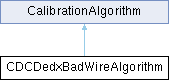
Inheritance diagram for CDCDedxBadWireAlgorithm:
CalibrationAlgorithm

Public Types

enum  EResult {
  c_OK ,
  c_Iterate ,
  c_NotEnoughData ,
  c_Failure ,
  c_Undefined
}
 The result of calibration. More...
 

Public Member Functions

 CDCDedxBadWireAlgorithm ()
 Constructor: Sets the description, the properties and the parameters of the algorithm.
 
virtual ~CDCDedxBadWireAlgorithm ()
 Destructor.
 
void setMonitoringPlots (bool value=false)
 function to enable plotting
 
void setHighFracThres (double value)
 function to set high dedx fraction threshold
 
void setRMSThres (double value)
 function to set RMS Threshold
 
void setMeanThres (double value)
 function to set Mean Threshold
 
void setADC (bool value=false)
 function to choose adc or dedx as variable
 
void setHistPars (int nbin, double min, double max)
 function to set adc/dedx parameters
 
void getExpRunInfo ()
 function to get extract calibration run/exp
 
void plotWireDist (const std::vector< double > &inwires, std::map< int, std::vector< double > > &vhitvar)
 function to draw per wire plots
 
void printCanvas (TList *list, TList *hflist, Color_t color)
 function to print canvas
 
void plotBadWireMap (const std::vector< double > &vbadwires, const std::vector< double > &vdeadwires)
 function to plot wire status map (all, bad and dead)
 
TH2F * getHistoPattern (const std::vector< double > &inwires, const std::string &suffix, int &total)
 function to get wire map with input file (all, bad and dead)
 
void plotQaPars (std::map< int, std::vector< double > > &qapars)
 function to plot the QA (decision) parameters
 
void plotEventStats ()
 function to draw the stats
 
void setTextCosmetics (TPaveText *pt, double size)
 function to change text styles
 
void setHistCosmetics (TH2F *hist, Color_t color)
 function to change histogram styles
 
const std::string & getPrefix () const
 Get the prefix used for getting calibration data.
 
const std::string & getCollectorName () const
 Alias for prefix.
 
void setPrefix (const std::string &prefix)
 Set the prefix used to identify datastore objects.
 
void setInputFileNames (PyObject *inputFileNames)
 Set the input file names used for this algorithm from a Python list.
 
PyObject * getInputFileNames ()
 Get the input file names used for this algorithm and pass them out as a Python list of unicode strings.
 
std::vector< Calibration::ExpRun > getRunListFromAllData () const
 Get the complete list of runs from inspection of collected data.
 
RunRange getRunRangeFromAllData () const
 Get the complete RunRange from inspection of collected data.
 
IntervalOfValidity getIovFromAllData () const
 Get the complete IoV from inspection of collected data.
 
void fillRunToInputFilesMap ()
 Fill the mapping of ExpRun -> Files.
 
const std::string & getGranularity () const
 Get the granularity of collected data.
 
EResult execute (std::vector< Calibration::ExpRun > runs={}, int iteration=0, IntervalOfValidity iov=IntervalOfValidity())
 Runs calibration over vector of runs for a given iteration.
 
EResult execute (PyObject *runs, int iteration=0, IntervalOfValidity iov=IntervalOfValidity())
 Runs calibration over Python list of runs. Converts to C++ and then calls the other execute() function.
 
std::list< Database::DBImportQuery > & getPayloads ()
 Get constants (in TObjects) for database update from last execution.
 
const std::list< Database::DBImportQuery > & getPayloadValues () const
 Get constants (in TObjects) for database update from last execution.
 
bool commit ()
 Submit constants from last calibration into database.
 
bool commit (std::list< Database::DBImportQuery > payloads)
 Submit constants from a (potentially previous) set of payloads.
 
const std::string & getDescription () const
 Get the description of the algorithm (set by developers in constructor)
 
bool loadInputJson (const std::string &jsonString)
 Load the m_inputJson variable from a string (useful from Python interface). The return bool indicates success or failure.
 
const std::string dumpOutputJson () const
 Dump the JSON string of the output JSON object.
 
const std::vector< Calibration::ExpRun > findPayloadBoundaries (std::vector< Calibration::ExpRun > runs, int iteration=0)
 Used to discover the ExpRun boundaries that you want the Python CAF to execute on. This is optional and only used in some.
 
template<>
std::shared_ptr< TTree > getObjectPtr (const std::string &name, const std::vector< Calibration::ExpRun > &requestedRuns)
 Specialization of getObjectPtr<TTree>.
 

Static Public Member Functions

static bool checkPyExpRun (PyObject *pyObj)
 Checks that a PyObject can be successfully converted to an ExpRun type.
 
static Calibration::ExpRun convertPyExpRun (PyObject *pyObj)
 Performs the conversion of PyObject to ExpRun.
 

Protected Member Functions

virtual EResult calibrate () override
 cdcdedx badwire algorithm
 
void setInputFileNames (const std::vector< std::string > &inputFileNames)
 Set the input file names used for this algorithm.
 
virtual bool isBoundaryRequired (const Calibration::ExpRun &)
 Given the current collector data, make a decision about whether or not this run should be the start of a payload boundary.
 
virtual void boundaryFindingSetup (std::vector< Calibration::ExpRun >, int)
 If you need to make some changes to your algorithm class before 'findPayloadBoundaries' is run, make them in this function.
 
virtual void boundaryFindingTearDown ()
 Put your algorithm back into a state ready for normal execution if you need to.
 
const std::vector< Calibration::ExpRun > & getRunList () const
 Get the list of runs for which calibration is called.
 
int getIteration () const
 Get current iteration.
 
const std::vector< std::string > & getVecInputFileNames () const
 Get the input file names used for this algorithm as a STL vector.
 
template<class T>
std::shared_ptr< T > getObjectPtr (const std::string &name, const std::vector< Calibration::ExpRun > &requestedRuns)
 Get calibration data object by name and list of runs, the Merge function will be called to generate the overall object.
 
template<class T>
std::shared_ptr< T > getObjectPtr (std::string name)
 Get calibration data object (for all runs the calibration is requested for) This function will only work during or after execute() has been called once.
 
template<>
shared_ptr< TTree > getObjectPtr (const string &name, const vector< ExpRun > &requestedRuns)
 We cheekily cast the TChain to TTree for the returned pointer so that the user never knows Hopefully this doesn't cause issues if people do low level stuff to the tree...
 
std::string getGranularityFromData () const
 Get the granularity of collected data.
 
void saveCalibration (TClonesArray *data, const std::string &name)
 Store DBArray payload with given name with default IOV.
 
void saveCalibration (TClonesArray *data, const std::string &name, const IntervalOfValidity &iov)
 Store DBArray with given name and custom IOV.
 
void saveCalibration (TObject *data)
 Store DB payload with default name and default IOV.
 
void saveCalibration (TObject *data, const IntervalOfValidity &iov)
 Store DB payload with default name and custom IOV.
 
void saveCalibration (TObject *data, const std::string &name)
 Store DB payload with given name with default IOV.
 
void saveCalibration (TObject *data, const std::string &name, const IntervalOfValidity &iov)
 Store DB payload with given name and custom IOV.
 
void setDescription (const std::string &description)
 Set algorithm description (in constructor)
 
void clearCalibrationData ()
 Clear calibration data.
 
void resetInputJson ()
 Clears the m_inputJson member variable.
 
void resetOutputJson ()
 Clears the m_outputJson member variable.
 
template<class T>
void setOutputJsonValue (const std::string &key, const T &value)
 Set a key:value pair for the outputJson object, expected to used internally during calibrate()
 
template<class T>
const T getOutputJsonValue (const std::string &key) const
 Get a value using a key from the JSON output object, not sure why you would want to do this.
 
template<class T>
const T getInputJsonValue (const std::string &key) const
 Get an input JSON value using a key. The normal exceptions are raised when the key doesn't exist.
 
const nlohmann::json & getInputJsonObject () const
 Get the entire top level JSON object. We explicitly say this must be of object type so that we might pick.
 
bool inputJsonKeyExists (const std::string &key) const
 Test for a key in the input JSON object.
 

Static Protected Member Functions

static void updateDBObjPtrs (const unsigned int event, const int run, const int experiment)
 Updates any DBObjPtrs by calling update(event) for DBStore.
 
static Calibration::ExpRun getAllGranularityExpRun ()
 Returns the Exp,Run pair that means 'Everything'. Currently unused.
 

Protected Attributes

std::vector< Calibration::ExpRun > m_boundaries
 When using the boundaries functionality from isBoundaryRequired, this is used to store the boundaries. It is cleared when.
 

Private Member Functions

std::string getExpRunString (Calibration::ExpRun &expRun) const
 Gets the "exp.run" string repr. of (exp,run)
 
std::string getFullObjectPath (const std::string &name, Calibration::ExpRun expRun) const
 constructs the full TDirectory + Key name of an object in a TFile based on its name and exprun
 

Private Attributes

unsigned int c_nwireCDC
 number of wires in CDC
 
bool m_isMakePlots
 produce plots for status
 
bool m_isADC
 Use adc if(true) else dedx for calibration.
 
int m_varBins
 number of bins for input variable
 
double m_varMin
 min range for input variable
 
double m_varMax
 max range for input variable
 
double m_meanThres
 mean Threshold accepted for good wire
 
double m_rmsThres
 rms Threshold accepted for good wire
 
double m_fracThres
 high-frac Threshold accepted for good wire
 
double m_amean_IL
 average mean of dedx for inner wires
 
double m_arms_IL
 average rms of dedx for inner wires
 
double m_amean_OL
 average mean of dedx for outer wires
 
double m_arms_OL
 average rms of dedx for outer wires
 
std::string m_varName
 std::string to set var name (adc or dedx)
 
std::string m_suffix
 suffix std::string for naming plots
 
int m_exp
 exp no to set SL boundaries
 
int m_slWireBoundary
 Boundary between inner layers: SL0 (<40), SL0+SL1 (>=40)
 
DBObjPtr< CDCDedxBadWiresm_DBBadWires
 Badwire DB object.
 
DBObjPtr< CDCDedxWireGainm_DBWireGains
 Wiregain DB object.
 
DBObjPtr< CDCGeometrym_cdcGeo
 Geometry of CDC.
 
std::vector< std::string > m_inputFileNames
 List of input files to the Algorithm, will initially be user defined but then gets the wildcards expanded during execute()
 
std::map< Calibration::ExpRun, std::vector< std::string > > m_runsToInputFiles
 Map of Runs to input files. Gets filled when you call getRunRangeFromAllData, gets cleared when setting input files again.
 
std::string m_granularityOfData
 Granularity of input data. This only changes when the input files change so it isn't specific to an execution.
 
ExecutionData m_data
 Data specific to a SINGLE execution of the algorithm. Gets reset at the beginning of execution.
 
std::string m_description {""}
 Description of the algorithm.
 
std::string m_prefix {""}
 The name of the TDirectory the collector objects are contained within.
 
nlohmann::json m_jsonExecutionInput = nlohmann::json::object()
 Optional input JSON object used to make decisions about how to execute the algorithm code.
 
nlohmann::json m_jsonExecutionOutput = nlohmann::json::object()
 Optional output JSON object that can be set during the execution by the underlying algorithm code.
 

Static Private Attributes

static const Calibration::ExpRun m_allExpRun = make_pair(-1, -1)
 allExpRun
 

Detailed Description

A calibration algorithm for CDC dE/dx to find the bad wires.

Definition at line 36 of file CDCDedxBadWireAlgorithm.h.

Member Enumeration Documentation

◆ EResult

enum EResult
inherited

The result of calibration.

Enumerator
c_OK 

Finished successfully =0 in Python.

c_Iterate 

Needs iteration =1 in Python.

c_NotEnoughData 

Needs more data =2 in Python.

c_Failure 

Failed =3 in Python.

c_Undefined 

Not yet known (before execution) =4 in Python.

Definition at line 40 of file CalibrationAlgorithm.h.

40 {
41 c_OK,
42 c_Iterate,
43 c_NotEnoughData,
44 c_Failure,
45 c_Undefined
46 };

Constructor & Destructor Documentation

◆ CDCDedxBadWireAlgorithm()

Constructor: Sets the description, the properties and the parameters of the algorithm.

Definition at line 26 of file CDCDedxBadWireAlgorithm.cc.

26 :
27 CalibrationAlgorithm("CDCDedxElectronCollector"),
28 c_nwireCDC(c_nSenseWires),
29 m_isMakePlots(true),
30 m_isADC(false),
31 m_varBins(100),
32 m_varMin(0.0),
33 m_varMax(7.0),
34 m_meanThres(1.0),
35 m_rmsThres(1.0),
36 m_fracThres(1.0),
37 m_varName("hitdedx"),
38 m_suffix("")
39{
40 // Set module properties
41 setDescription("A calibration algorithm for CDC dE/dx bad wires");
42}
double m_varMax
max range for input variable
double m_rmsThres
rms Threshold accepted for good wire
double m_varMin
min range for input variable
std::string m_varName
std::string to set var name (adc or dedx)
unsigned int c_nwireCDC
number of wires in CDC
bool m_isMakePlots
produce plots for status
std::string m_suffix
suffix std::string for naming plots
double m_meanThres
mean Threshold accepted for good wire
double m_fracThres
high-frac Threshold accepted for good wire
int m_varBins
number of bins for input variable
bool m_isADC
Use adc if(true) else dedx for calibration.
void setDescription(const std::string &description)
Set algorithm description (in constructor)
CalibrationAlgorithm(const std::string &collectorModuleName)
Constructor - sets the prefix for collected objects (won't be accesses until execute(....

◆ ~CDCDedxBadWireAlgorithm()

virtual ~CDCDedxBadWireAlgorithm ( )
inlinevirtual

Destructor.

Definition at line 48 of file CDCDedxBadWireAlgorithm.h.

48{}

Member Function Documentation

◆ boundaryFindingSetup()

virtual void boundaryFindingSetup ( std::vector< Calibration::ExpRun > ,
int  )
inlineprotectedvirtualinherited

If you need to make some changes to your algorithm class before 'findPayloadBoundaries' is run, make them in this function.

Reimplemented in PXDAnalyticGainCalibrationAlgorithm, PXDValidationAlgorithm, SVD3SampleCoGTimeCalibrationAlgorithm, SVD3SampleELSTimeCalibrationAlgorithm, SVDCoGTimeCalibrationAlgorithm, TestBoundarySettingAlgorithm, and TestCalibrationAlgorithm.

Definition at line 252 of file CalibrationAlgorithm.h.

252{};

◆ boundaryFindingTearDown()

virtual void boundaryFindingTearDown ( )
inlineprotectedvirtualinherited

Put your algorithm back into a state ready for normal execution if you need to.

Definition at line 257 of file CalibrationAlgorithm.h.

257{};

◆ calibrate()

CalibrationAlgorithm::EResult calibrate ( )
overrideprotectedvirtual

cdcdedx badwire algorithm

Implements CalibrationAlgorithm.

Definition at line 47 of file CDCDedxBadWireAlgorithm.cc.

48{
49
51
52 //old wg for book-keeping previous bad+dead
53 if (!m_DBBadWires.isValid() || !m_DBWireGains.isValid())
54 B2FATAL("There is no valid payload for BadWire and/or Wirgain");
55
56 // Get data objects
57 auto ttree = getObjectPtr<TTree>("tree");
58 if (ttree->GetEntries() < 1000) return c_NotEnoughData;
59
60 vector<int>* wire = 0;
61 ttree->SetBranchAddress("wire", &wire);
62
63 vector<double>* hitvar = 0;
64 if (m_isADC) ttree->SetBranchAddress("adccorr", &hitvar);
65 else ttree->SetBranchAddress("dedxhit", &hitvar);
66
67 if (m_isADC) m_varName = "hitadc";
68 m_suffix = Form("%s_%s", m_varName.data(), m_suffix.data());
69
70 //IL = Inner Layer and OL = Outer Layer
71 array<TH1D*, 2> hvarL;
72 string label[2] = {"IL", "OL"};
73 for (int il = 0; il < 2; il++) {
74 hvarL[il] = new TH1D(Form("hvar%s_%s", label[il].data(), m_suffix.data()), "", m_varBins, m_varMin, m_varMax);
75 hvarL[il]->SetTitle(Form("dist (%s) %s; %s; %s", label[il].data(), m_suffix.data(), m_varName.data(), "entries"));
76 }
77
78 map<int, vector<double>> vhitvar;
79
80 m_slWireBoundary = (m_exp < 40) ? 1280 : 2240;
81
82 for (int i = 0; i < ttree->GetEntries(); ++i) {
83 ttree->GetEvent(i);
84 for (unsigned int ih = 0; ih < wire->size(); ++ih) {
85 int jwire = wire->at(ih);
86 double ivalue = hitvar->at(ih);
87 vhitvar[wire->at(ih)].push_back(ivalue);
88
89 if (jwire < m_slWireBoundary) hvarL[0]->Fill(ivalue);
90 else hvarL[1]->Fill(ivalue);
91 }
92 }
93
94 m_amean_IL = hvarL[0]->GetMean();
95 m_arms_IL = hvarL[0]->GetRMS();
96 m_amean_OL = hvarL[1]->GetMean();
97 m_arms_OL = hvarL[1]->GetRMS();
98
99 // Commenting minstat cut on March 2024,
100 //it is not worth to skip the calibration if there is more than 5% bad/dead wires
101
102 //return if >5% bad wire or null histogram
103 // int minstat = 0;
104 // for (unsigned int jw = 0; jw < c_nwireCDC; ++jw)
105 // if (vhitvar[jw].size() <= 100) minstat++;
106 // if (minstat > 0.05 * c_nwireCDC) return c_NotEnoughData;
107
108 if (m_amean_IL == 0 || m_arms_IL == 0 || m_amean_OL == 0 || m_arms_OL == 0) return c_NotEnoughData;
109
110 map<int, vector<double>> qapars;
111 vector<double> vdefectwires, vbadwires, vdeadwires;
112
113 for (unsigned int jw = 0; jw < c_nwireCDC; ++jw) {
114 int ncount = 0, tcount = 0;
115 double nmean = 0.;
116 for (unsigned int jh = 0; jh < vhitvar[jw].size(); ++jh) {
117 double jvalue = vhitvar[jw][jh];
118 if (jvalue < m_varMax) {
119 ncount++;
120 nmean += jvalue;
121 } else tcount++;
122 }
123
124 bool badwire = false;
125 if (ncount < 100) {
126 qapars[0].push_back(0);
127 qapars[1].push_back(0);
128 qapars[2].push_back(0);
129 badwire = true; //partial dead
130 } else {
131 nmean = nmean / ncount;
132 if (int(jw) < m_slWireBoundary) {
133 if (abs(nmean - m_amean_IL) / m_amean_IL > m_meanThres) badwire = true;
134 } else
135 {if (abs(nmean - m_amean_OL) / m_amean_OL > m_meanThres) badwire = true;}
136
137 double nrms = 0.;
138 for (unsigned int kh = 0; kh < vhitvar[jw].size(); ++kh) {
139 double kvalue = vhitvar[jw][kh];
140 if (kvalue < m_varMax) nrms += pow(kvalue - nmean, 2);
141 }
142
143 nrms = sqrt(nrms / ncount);
144 if (int(jw) < m_slWireBoundary)
145 {if (abs(nrms - m_arms_IL) / m_arms_IL > m_rmsThres) badwire = true;}
146 else
147 {if (abs(nrms - m_arms_OL) / m_arms_OL > m_rmsThres) badwire = true;}
148
149 double badfrac = 0.0;
150 if (tcount > 0) badfrac = (1.0 * tcount) / (tcount + ncount);
151 if (badfrac > m_fracThres) badwire = true;
152
153 qapars[0].push_back(nmean);
154 qapars[1].push_back(nrms);
155 qapars[2].push_back(badfrac);
156 }
157
158 if (badwire) {
159 vdefectwires.push_back(0.0);
160 if (ncount == 0) vdeadwires.push_back(jw);
161 else vbadwires.push_back(jw);
162 } else vdefectwires.push_back(1.0);
163 }
164
165
166 if (m_isMakePlots) {
167 //1. plot bad and good wire plots.
168 plotWireDist(vbadwires, vhitvar);
169
170 //2. plots wire status map
171 plotBadWireMap(vbadwires, vdeadwires);
172
173 //3. plot control parameters histograms
174 plotQaPars(qapars);
175
176 //4. plot statistics related histograms
178 }
179
180 // Save payloads
181 B2INFO("dE/dx Badwire Calibration done: " << vdefectwires.size() << " wires");
182 CDCDedxBadWires* c_badwires = new CDCDedxBadWires(vdefectwires);
183 saveCalibration(c_badwires, "CDCDedxBadWires");
184
185 m_suffix.clear();
186
187 return c_OK;
188}
void plotBadWireMap(const std::vector< double > &vbadwires, const std::vector< double > &vdeadwires)
function to plot wire status map (all, bad and dead)
int m_slWireBoundary
Boundary between inner layers: SL0 (<40), SL0+SL1 (>=40)
double m_amean_IL
average mean of dedx for inner wires
void getExpRunInfo()
function to get extract calibration run/exp
DBObjPtr< CDCDedxBadWires > m_DBBadWires
Badwire DB object.
int m_exp
exp no to set SL boundaries
DBObjPtr< CDCDedxWireGain > m_DBWireGains
Wiregain DB object.
void plotQaPars(std::map< int, std::vector< double > > &qapars)
function to plot the QA (decision) parameters
void plotEventStats()
function to draw the stats
void plotWireDist(const std::vector< double > &inwires, std::map< int, std::vector< double > > &vhitvar)
function to draw per wire plots
double m_arms_IL
average rms of dedx for inner wires
double m_arms_OL
average rms of dedx for outer wires
double m_amean_OL
average mean of dedx for outer wires
void saveCalibration(TClonesArray *data, const std::string &name)
Store DBArray payload with given name with default IOV.
@ c_OK
Finished successfully =0 in Python.
@ c_NotEnoughData
Needs more data =2 in Python.
std::shared_ptr< T > getObjectPtr(const std::string &name, const std::vector< Calibration::ExpRun > &requestedRuns)
Get calibration data object by name and list of runs, the Merge function will be called to generate t...
double sqrt(double a)
sqrt for double
Definition beamHelpers.h:28

◆ checkPyExpRun()

bool checkPyExpRun ( PyObject * pyObj)
staticinherited

Checks that a PyObject can be successfully converted to an ExpRun type.

Checks if the PyObject can be converted to ExpRun.

Definition at line 28 of file CalibrationAlgorithm.cc.

29{
30 // Is it a sequence?
31 if (PySequence_Check(pyObj)) {
32 Py_ssize_t nObj = PySequence_Length(pyObj);
33 // Does it have 2 objects in it?
34 if (nObj != 2) {
35 B2DEBUG(29, "ExpRun was a Python sequence which didn't have exactly 2 entries!");
36 return false;
37 }
38 PyObject* item1, *item2;
39 item1 = PySequence_GetItem(pyObj, 0);
40 item2 = PySequence_GetItem(pyObj, 1);
41 // Did the GetItem work?
42 if ((item1 == NULL) || (item2 == NULL)) {
43 B2DEBUG(29, "A PyObject pointer was NULL in the sequence");
44 return false;
45 }
46 // Are they longs?
47 if (PyLong_Check(item1) && PyLong_Check(item2)) {
48 long value1, value2;
49 value1 = PyLong_AsLong(item1);
50 value2 = PyLong_AsLong(item2);
51 if (((value1 == -1) || (value2 == -1)) && PyErr_Occurred()) {
52 B2DEBUG(29, "An error occurred while converting the PyLong to long");
53 return false;
54 }
55 } else {
56 B2DEBUG(29, "One or more of the PyObjects in the ExpRun wasn't a long");
57 return false;
58 }
59 // Make sure to kill off the reference GetItem gave us responsibility for
60 Py_DECREF(item1);
61 Py_DECREF(item2);
62 } else {
63 B2DEBUG(29, "ExpRun was not a Python sequence.");
64 return false;
65 }
66 return true;
67}

◆ clearCalibrationData()

void clearCalibrationData ( )
inlineprotectedinherited

Clear calibration data.

Definition at line 324 of file CalibrationAlgorithm.h.

324{m_data.clearCalibrationData();}

◆ commit() [1/2]

bool commit ( )
inherited

Submit constants from last calibration into database.

Definition at line 302 of file CalibrationAlgorithm.cc.

303{
304 if (getPayloads().empty())
305 return false;
306 list<Database::DBImportQuery> payloads = getPayloads();
307 B2INFO("Committing " << payloads.size() << " payloads to database.");
308 return Database::Instance().storeData(payloads);
309}
std::list< Database::DBImportQuery > & getPayloads()
Get constants (in TObjects) for database update from last execution.
static Database & Instance()
Instance of a singleton Database.
Definition Database.cc:41
bool storeData(const std::string &name, TObject *object, const IntervalOfValidity &iov)
Store an object in the database.
Definition Database.cc:140

◆ commit() [2/2]

bool commit ( std::list< Database::DBImportQuery > payloads)
inherited

Submit constants from a (potentially previous) set of payloads.

Definition at line 312 of file CalibrationAlgorithm.cc.

313{
314 if (payloads.empty())
315 return false;
316 return Database::Instance().storeData(payloads);
317}

◆ convertPyExpRun()

ExpRun convertPyExpRun ( PyObject * pyObj)
staticinherited

Performs the conversion of PyObject to ExpRun.

Converts the PyObject to an ExpRun. We've preoviously checked the object so this assumes a lot about the PyObject.

Definition at line 70 of file CalibrationAlgorithm.cc.

71{
72 ExpRun expRun;
73 PyObject* itemExp, *itemRun;
74 itemExp = PySequence_GetItem(pyObj, 0);
75 itemRun = PySequence_GetItem(pyObj, 1);
76 expRun.first = PyLong_AsLong(itemExp);
77 Py_DECREF(itemExp);
78 expRun.second = PyLong_AsLong(itemRun);
79 Py_DECREF(itemRun);
80 return expRun;
81}

◆ dumpOutputJson()

const std::string dumpOutputJson ( ) const
inlineinherited

Dump the JSON string of the output JSON object.

Definition at line 223 of file CalibrationAlgorithm.h.

223{return m_jsonExecutionOutput.dump();}

◆ execute() [1/2]

CalibrationAlgorithm::EResult execute ( PyObject * runs,
int iteration = 0,
IntervalOfValidity iov = IntervalOfValidity() )
inherited

Runs calibration over Python list of runs. Converts to C++ and then calls the other execute() function.

Definition at line 83 of file CalibrationAlgorithm.cc.

84{
85 B2DEBUG(29, "Running execute() using Python Object as input argument");
86 // Reset the execution specific data in case the algorithm was previously called
87 m_data.reset();
88 m_data.setIteration(iteration);
89 vector<ExpRun> vecRuns;
90 // Is it a list?
91 if (PySequence_Check(runs)) {
92 boost::python::handle<> handle(boost::python::borrowed(runs));
93 boost::python::list listRuns(handle);
94
95 int nList = boost::python::len(listRuns);
96 for (int iList = 0; iList < nList; ++iList) {
97 boost::python::object pyExpRun(listRuns[iList]);
98 if (!checkPyExpRun(pyExpRun.ptr())) {
99 B2ERROR("Received Python ExpRuns couldn't be converted to C++");
100 m_data.setResult(c_Failure);
101 return c_Failure;
102 } else {
103 vecRuns.push_back(convertPyExpRun(pyExpRun.ptr()));
104 }
105 }
106 } else {
107 B2ERROR("Tried to set the input runs but we didn't receive a Python sequence object (list,tuple).");
108 m_data.setResult(c_Failure);
109 return c_Failure;
110 }
111 return execute(vecRuns, iteration, iov);
112}
static bool checkPyExpRun(PyObject *pyObj)
Checks that a PyObject can be successfully converted to an ExpRun type.
EResult execute(std::vector< Calibration::ExpRun > runs={}, int iteration=0, IntervalOfValidity iov=IntervalOfValidity())
Runs calibration over vector of runs for a given iteration.
static Calibration::ExpRun convertPyExpRun(PyObject *pyObj)
Performs the conversion of PyObject to ExpRun.
ExecutionData m_data
Data specific to a SINGLE execution of the algorithm. Gets reset at the beginning of execution.

◆ execute() [2/2]

CalibrationAlgorithm::EResult execute ( std::vector< Calibration::ExpRun > runs = {},
int iteration = 0,
IntervalOfValidity iov = IntervalOfValidity() )
inherited

Runs calibration over vector of runs for a given iteration.

You can also specify the IoV to save the database payload as. By default the Algorithm will create an IoV from your requested ExpRuns, or from the overall ExpRuns of the input data if you haven't specified ExpRuns in this function.

No checks are performed to make sure that a IoV you specify matches the data you ran over, it simply labels the IoV to commit to the database later.

Definition at line 114 of file CalibrationAlgorithm.cc.

115{
116 // Check if we are calling this function directly and need to reset, or through Python where it was already done.
117 if (m_data.getResult() != c_Undefined) {
118 m_data.reset();
119 m_data.setIteration(iteration);
120 }
121
122 if (m_inputFileNames.empty()) {
123 B2ERROR("There aren't any input files set. Please use CalibrationAlgorithm::setInputFiles()");
124 m_data.setResult(c_Failure);
125 return c_Failure;
126 }
127
128 // Did we receive runs to execute over explicitly?
129 if (!(runs.empty())) {
130 for (auto expRun : runs) {
131 B2DEBUG(29, "ExpRun requested = (" << expRun.first << ", " << expRun.second << ")");
132 }
133 // We've asked explicitly for certain runs, but we should check if the data granularity is 'run'
134 if (strcmp(getGranularity().c_str(), "all") == 0) {
135 B2ERROR(("The data is collected with granularity=all (exp=-1,run=-1), but you seem to request calibration for specific runs."
136 " We'll continue but using ALL the input data given instead of the specific runs requested."));
137 }
138 } else {
139 // If no runs are provided, infer the runs from all collected data
140 runs = getRunListFromAllData();
141 // Let's check that we have some now
142 if (runs.empty()) {
143 B2ERROR("No collected data in input files.");
144 m_data.setResult(c_Failure);
145 return c_Failure;
146 }
147 for (auto expRun : runs) {
148 B2DEBUG(29, "ExpRun requested = (" << expRun.first << ", " << expRun.second << ")");
149 }
150 }
151
152 m_data.setRequestedRuns(runs);
153 if (iov.empty()) {
154 // If no user specified IoV we use the IoV from the executed run list
155 iov = IntervalOfValidity(runs[0].first, runs[0].second, runs[runs.size() - 1].first, runs[runs.size() - 1].second);
156 }
157 m_data.setRequestedIov(iov);
158 // After here, the getObject<...>(...) helpers start to work
159
161 m_data.setResult(result);
162 return result;
163}
std::vector< Calibration::ExpRun > getRunListFromAllData() const
Get the complete list of runs from inspection of collected data.
std::vector< std::string > m_inputFileNames
List of input files to the Algorithm, will initially be user defined but then gets the wildcards expa...
EResult
The result of calibration.
@ c_Undefined
Not yet known (before execution) =4 in Python.
const std::string & getGranularity() const
Get the granularity of collected data.
virtual EResult calibrate()=0
Run algo on data - pure virtual: needs to be implemented.

◆ fillRunToInputFilesMap()

void fillRunToInputFilesMap ( )
inherited

Fill the mapping of ExpRun -> Files.

Definition at line 331 of file CalibrationAlgorithm.cc.

332{
333 m_runsToInputFiles.clear();
334 // Save TDirectory to change back at the end
335 TDirectory* dir = gDirectory;
336 RunRange* runRange;
337 // Construct the TDirectory name where we expect our objects to be
338 string runRangeObjName(getPrefix() + "/" + RUN_RANGE_OBJ_NAME);
339 for (const auto& fileName : m_inputFileNames) {
340 //Open TFile to get the objects
341 unique_ptr<TFile> f;
342 f.reset(TFile::Open(fileName.c_str(), "READ"));
343 runRange = dynamic_cast<RunRange*>(f->Get(runRangeObjName.c_str()));
344 if (runRange) {
345 // Insert or extend the run -> file mapping for this ExpRun
346 auto expRuns = runRange->getExpRunSet();
347 for (const auto& expRun : expRuns) {
348 auto runFiles = m_runsToInputFiles.find(expRun);
349 if (runFiles != m_runsToInputFiles.end()) {
350 (runFiles->second).push_back(fileName);
351 } else {
352 m_runsToInputFiles.insert(std::make_pair(expRun, std::vector<std::string> {fileName}));
353 }
354 }
355 } else {
356 B2WARNING("Missing a RunRange object for file: " << fileName);
357 }
358 }
359 dir->cd();
360}
const std::string & getPrefix() const
Get the prefix used for getting calibration data.
std::map< Calibration::ExpRun, std::vector< std::string > > m_runsToInputFiles
Map of Runs to input files. Gets filled when you call getRunRangeFromAllData, gets cleared when setti...
const std::set< Calibration::ExpRun > & getExpRunSet()
Get access to the stored set.
Definition RunRange.h:64

◆ findPayloadBoundaries()

const std::vector< ExpRun > findPayloadBoundaries ( std::vector< Calibration::ExpRun > runs,
int iteration = 0 )
inherited

Used to discover the ExpRun boundaries that you want the Python CAF to execute on. This is optional and only used in some.

Definition at line 521 of file CalibrationAlgorithm.cc.

522{
523 m_boundaries.clear();
524 if (m_inputFileNames.empty()) {
525 B2ERROR("There aren't any input files set. Please use CalibrationAlgorithm::setInputFiles()");
526 return m_boundaries;
527 }
528 // Reset the internal execution data just in case something is hanging around
529 m_data.reset();
530 if (runs.empty()) {
531 // Want to loop over all runs we could possibly know about
532 runs = getRunListFromAllData();
533 }
534 // Let's check that we have some now
535 if (runs.empty()) {
536 B2ERROR("No collected data in input files.");
537 return m_boundaries;
538 }
539 // In order to find run boundaries we must have collected with data granularity == 'run'
540 if (strcmp(getGranularity().c_str(), "all") == 0) {
541 B2ERROR("The data is collected with granularity='all' (exp=-1,run=-1), and we can't use that to find run boundaries.");
542 return m_boundaries;
543 }
544 m_data.setIteration(iteration);
545 // User defined setup function
546 boundaryFindingSetup(runs, iteration);
547 std::vector<ExpRun> runList;
548 // Loop over run list and call derived class "isBoundaryRequired" member function
549 for (auto currentRun : runs) {
550 runList.push_back(currentRun);
551 m_data.setRequestedRuns(runList);
552 // After here, the getObject<...>(...) helpers start to work
553 if (isBoundaryRequired(currentRun)) {
554 m_boundaries.push_back(currentRun);
555 }
556 // Only want run-by-run
557 runList.clear();
558 // Don't want memory hanging around
559 m_data.clearCalibrationData();
560 }
561 m_data.reset();
563 return m_boundaries;
564}
std::vector< Calibration::ExpRun > m_boundaries
When using the boundaries functionality from isBoundaryRequired, this is used to store the boundaries...
virtual void boundaryFindingTearDown()
Put your algorithm back into a state ready for normal execution if you need to.
virtual void boundaryFindingSetup(std::vector< Calibration::ExpRun >, int)
If you need to make some changes to your algorithm class before 'findPayloadBoundaries' is run,...
virtual bool isBoundaryRequired(const Calibration::ExpRun &)
Given the current collector data, make a decision about whether or not this run should be the start o...

◆ getAllGranularityExpRun()

static Calibration::ExpRun getAllGranularityExpRun ( )
inlinestaticprotectedinherited

Returns the Exp,Run pair that means 'Everything'. Currently unused.

Definition at line 327 of file CalibrationAlgorithm.h.

327{return m_allExpRun;}

◆ getCollectorName()

const std::string & getCollectorName ( ) const
inlineinherited

Alias for prefix.

For convenience and less writing, we say developers to set this to default collector module name in constructor of base class. One can however use the dublets of collector+algorithm multiple times with different settings. To bind these together correctly, the prefix has to be set the same for algo and collector. So we call the setter setPrefix rather than setModuleName or whatever. This getter will work out of the box for default cases -> return the name of module you have to add to your path to collect data for this algorithm.

Definition at line 164 of file CalibrationAlgorithm.h.

164{return getPrefix();}

◆ getDescription()

const std::string & getDescription ( ) const
inlineinherited

Get the description of the algorithm (set by developers in constructor)

Definition at line 216 of file CalibrationAlgorithm.h.

216{return m_description;}

◆ getExpRunInfo()

void getExpRunInfo ( )

function to get extract calibration run/exp

Definition at line 191 of file CDCDedxBadWireAlgorithm.cc.

192{
193
194 int cruns = 0;
195 for (auto expRun : getRunList()) {
196 if (cruns == 0) B2INFO("CDCDedxBadWires: start exp " << expRun.first << " and run " << expRun.second << "");
197 cruns++;
198 }
199
200 const auto erStart = getRunList()[0];
201 int estart = erStart.first;
202 int rstart = erStart.second;
203
204 const auto erEnd = getRunList()[cruns - 1];
205 int rend = erEnd.second;
206
207 m_exp = estart;
208
209 updateDBObjPtrs(1, rstart, estart);
210
211 if (m_suffix.length() > 0) m_suffix = Form("%s_e%d_r%dr%d", m_suffix.data(), estart, rstart, rend);
212 else m_suffix = Form("e%d_r%dr%d", estart, rstart, rend);
213}
static void updateDBObjPtrs(const unsigned int event, const int run, const int experiment)
Updates any DBObjPtrs by calling update(event) for DBStore.
const std::vector< Calibration::ExpRun > & getRunList() const
Get the list of runs for which calibration is called.

◆ getExpRunString()

string getExpRunString ( Calibration::ExpRun & expRun) const
privateinherited

Gets the "exp.run" string repr. of (exp,run)

Definition at line 254 of file CalibrationAlgorithm.cc.

255{
256 string expRunString;
257 expRunString += to_string(expRun.first);
258 expRunString += ".";
259 expRunString += to_string(expRun.second);
260 return expRunString;
261}

◆ getFullObjectPath()

string getFullObjectPath ( const std::string & name,
Calibration::ExpRun expRun ) const
privateinherited

constructs the full TDirectory + Key name of an object in a TFile based on its name and exprun

Definition at line 263 of file CalibrationAlgorithm.cc.

264{
265 string dirName = getPrefix() + "/" + name;
266 string objName = name + "_" + getExpRunString(expRun);
267 return dirName + "/" + objName;
268}
std::string getExpRunString(Calibration::ExpRun &expRun) const
Gets the "exp.run" string repr. of (exp,run)

◆ getGranularity()

const std::string & getGranularity ( ) const
inlineinherited

Get the granularity of collected data.

Definition at line 188 of file CalibrationAlgorithm.h.

188{return m_granularityOfData;};

◆ getGranularityFromData()

string getGranularityFromData ( ) const
protectedinherited

Get the granularity of collected data.

Definition at line 384 of file CalibrationAlgorithm.cc.

385{
386 // Save TDirectory to change back at the end
387 TDirectory* dir = gDirectory;
388 const RunRange* runRange;
389 string runRangeObjName(getPrefix() + "/" + RUN_RANGE_OBJ_NAME);
390 // We only check the first file
391 string fileName = m_inputFileNames[0];
392 unique_ptr<TFile> f;
393 f.reset(TFile::Open(fileName.c_str(), "READ"));
394 runRange = dynamic_cast<RunRange*>(f->Get(runRangeObjName.c_str()));
395 if (!runRange) {
396 B2FATAL("The input file " << fileName << " does not contain a RunRange object at "
397 << runRangeObjName << ". Please set your input files to exclude it.");
398 return "";
399 }
400 string granularity = runRange->getGranularity();
401 dir->cd();
402 return granularity;
403}
const std::string & getGranularity() const
Gets the m_granularity.
Definition RunRange.h:110

◆ getHistoPattern()

TH2F * getHistoPattern ( const std::vector< double > & inwires,
const std::string & suffix,
int & total )

function to get wire map with input file (all, bad and dead)

Definition at line 394 of file CDCDedxBadWireAlgorithm.cc.

395{
396
397 B2INFO("Creating CDCGeometryPar object");
398 CDCGeometryPar& cdcgeo = CDCGeometryPar::Instance(&(*m_cdcGeo));
399
400 TH2F* temp = new TH2F(Form("temp_%s_%s", m_suffix.data(), suffix.data()), "", 2400, -1.2, 1.2, 2400, -1.2, 1.2);
401
402 int jwire = -1;
403 total = 0;
404 for (unsigned int ilay = 0; ilay < c_maxNSenseLayers; ++ilay) {
405 for (unsigned int iwire = 0; iwire < cdcgeo.nWiresInLayer(ilay); ++iwire) {
406 jwire++;
407 double phi = 2.*TMath::Pi() * (float(iwire) / float(cdcgeo.nWiresInLayer(ilay)));
408 double radius = cdcgeo.senseWireR(ilay) / 100.;
409 double x = radius * cos(phi);
410 double y = radius * sin(phi);
411 if (suffix == "all") {
412 total++;
413 temp->Fill(x, y);
414 } else {
415 if (count(inwires.begin(), inwires.end(), jwire)) {
416 temp->Fill(x, y);
417 total++;
418 }
419 }
420 }
421 }
422 return temp;
423}
DBObjPtr< CDCGeometry > m_cdcGeo
Geometry of CDC.
unsigned nWiresInLayer(int layerId) const
Returns wire numbers in a layer.
static CDCGeometryPar & Instance(const CDCGeometry *=nullptr)
Static method to get a reference to the CDCGeometryPar instance.
double senseWireR(int layerId) const
Returns radius of sense wire in each layer.

◆ getInputFileNames()

PyObject * getInputFileNames ( )
inherited

Get the input file names used for this algorithm and pass them out as a Python list of unicode strings.

Definition at line 245 of file CalibrationAlgorithm.cc.

246{
247 PyObject* objInputFileNames = PyList_New(m_inputFileNames.size());
248 for (size_t i = 0; i < m_inputFileNames.size(); ++i) {
249 PyList_SetItem(objInputFileNames, i, Py_BuildValue("s", m_inputFileNames[i].c_str()));
250 }
251 return objInputFileNames;
252}

◆ getInputJsonObject()

const nlohmann::json & getInputJsonObject ( ) const
inlineprotectedinherited

Get the entire top level JSON object. We explicitly say this must be of object type so that we might pick.

Definition at line 357 of file CalibrationAlgorithm.h.

357{return m_jsonExecutionInput;}

◆ getInputJsonValue()

template<class T>
const T getInputJsonValue ( const std::string & key) const
inlineprotectedinherited

Get an input JSON value using a key. The normal exceptions are raised when the key doesn't exist.

Definition at line 350 of file CalibrationAlgorithm.h.

351 {
352 return m_jsonExecutionInput.at(key);
353 }

◆ getIovFromAllData()

IntervalOfValidity getIovFromAllData ( ) const
inherited

Get the complete IoV from inspection of collected data.

Definition at line 326 of file CalibrationAlgorithm.cc.

327{
329}
RunRange getRunRangeFromAllData() const
Get the complete RunRange from inspection of collected data.
IntervalOfValidity getIntervalOfValidity()
Make IntervalOfValidity from the set, spanning all runs. Works because sets are sorted by default.
Definition RunRange.h:70

◆ getIteration()

int getIteration ( ) const
inlineprotectedinherited

Get current iteration.

Definition at line 269 of file CalibrationAlgorithm.h.

269{ return m_data.getIteration(); }

◆ getObjectPtr()

template<class T>
std::shared_ptr< T > getObjectPtr ( std::string name)
inlineprotectedinherited

Get calibration data object (for all runs the calibration is requested for) This function will only work during or after execute() has been called once.

Definition at line 285 of file CalibrationAlgorithm.h.

286 {
287 if (m_runsToInputFiles.size() == 0)
288 fillRunToInputFilesMap();
289 return getObjectPtr<T>(name, m_data.getRequestedRuns());
290 }

◆ getOutputJsonValue()

template<class T>
const T getOutputJsonValue ( const std::string & key) const
inlineprotectedinherited

Get a value using a key from the JSON output object, not sure why you would want to do this.

Definition at line 342 of file CalibrationAlgorithm.h.

343 {
344 return m_jsonExecutionOutput.at(key);
345 }

◆ getPayloads()

std::list< Database::DBImportQuery > & getPayloads ( )
inlineinherited

Get constants (in TObjects) for database update from last execution.

Definition at line 204 of file CalibrationAlgorithm.h.

204{return m_data.getPayloads();}

◆ getPayloadValues()

const std::list< Database::DBImportQuery > & getPayloadValues ( ) const
inlineinherited

Get constants (in TObjects) for database update from last execution.

Definition at line 207 of file CalibrationAlgorithm.h.

207{return m_data.getPayloadValues();}

◆ getPrefix()

const std::string & getPrefix ( ) const
inlineinherited

Get the prefix used for getting calibration data.

Definition at line 146 of file CalibrationAlgorithm.h.

146{return m_prefix;}

◆ getRunList()

const std::vector< Calibration::ExpRun > & getRunList ( ) const
inlineprotectedinherited

Get the list of runs for which calibration is called.

Definition at line 266 of file CalibrationAlgorithm.h.

266{return m_data.getRequestedRuns();}

◆ getRunListFromAllData()

vector< ExpRun > getRunListFromAllData ( ) const
inherited

Get the complete list of runs from inspection of collected data.

Definition at line 319 of file CalibrationAlgorithm.cc.

320{
321 RunRange runRange = getRunRangeFromAllData();
322 set<ExpRun> expRunSet = runRange.getExpRunSet();
323 return vector<ExpRun>(expRunSet.begin(), expRunSet.end());
324}

◆ getRunRangeFromAllData()

RunRange getRunRangeFromAllData ( ) const
inherited

Get the complete RunRange from inspection of collected data.

Definition at line 362 of file CalibrationAlgorithm.cc.

363{
364 // Save TDirectory to change back at the end
365 TDirectory* dir = gDirectory;
366 RunRange runRange;
367 // Construct the TDirectory name where we expect our objects to be
368 string runRangeObjName(getPrefix() + "/" + RUN_RANGE_OBJ_NAME);
369 for (const auto& fileName : m_inputFileNames) {
370 //Open TFile to get the objects
371 unique_ptr<TFile> f;
372 f.reset(TFile::Open(fileName.c_str(), "READ"));
373 const RunRange* runRangeOther = dynamic_cast<RunRange*>(f->Get(runRangeObjName.c_str()));
374 if (runRangeOther) {
375 runRange.merge(runRangeOther);
376 } else {
377 B2WARNING("Missing a RunRange object for file: " << fileName);
378 }
379 }
380 dir->cd();
381 return runRange;
382}
virtual void merge(const RunRange *other)
Implementation of merging - other is added to the set (union)
Definition RunRange.h:52

◆ getVecInputFileNames()

const std::vector< std::string > & getVecInputFileNames ( ) const
inlineprotectedinherited

Get the input file names used for this algorithm as a STL vector.

Definition at line 275 of file CalibrationAlgorithm.h.

275{return m_inputFileNames;}

◆ inputJsonKeyExists()

bool inputJsonKeyExists ( const std::string & key) const
inlineprotectedinherited

Test for a key in the input JSON object.

Definition at line 360 of file CalibrationAlgorithm.h.

360{return m_jsonExecutionInput.count(key);}

◆ isBoundaryRequired()

virtual bool isBoundaryRequired ( const Calibration::ExpRun & )
inlineprotectedvirtualinherited

Given the current collector data, make a decision about whether or not this run should be the start of a payload boundary.

Reimplemented in PXDAnalyticGainCalibrationAlgorithm, PXDValidationAlgorithm, SVD3SampleCoGTimeCalibrationAlgorithm, SVD3SampleELSTimeCalibrationAlgorithm, SVDCoGTimeCalibrationAlgorithm, TestBoundarySettingAlgorithm, and TestCalibrationAlgorithm.

Definition at line 243 of file CalibrationAlgorithm.h.

244 {
245 B2ERROR("You didn't implement a isBoundaryRequired() member function in your CalibrationAlgorithm but you are calling it!");
246 return false;
247 }

◆ loadInputJson()

bool loadInputJson ( const std::string & jsonString)
inherited

Load the m_inputJson variable from a string (useful from Python interface). The return bool indicates success or failure.

Definition at line 503 of file CalibrationAlgorithm.cc.

504{
505 try {
506 auto jsonInput = nlohmann::json::parse(jsonString);
507 // Input string has an object (dict) as the top level object?
508 if (jsonInput.is_object()) {
509 m_jsonExecutionInput = jsonInput;
510 return true;
511 } else {
512 B2ERROR("JSON input string isn't an object type i.e. not a '{}' at the top level.");
513 return false;
514 }
515 } catch (nlohmann::json::parse_error&) {
516 B2ERROR("Parsing of JSON input string failed");
517 return false;
518 }
519}
nlohmann::json m_jsonExecutionInput
Optional input JSON object used to make decisions about how to execute the algorithm code.

◆ plotBadWireMap()

void plotBadWireMap ( const std::vector< double > & vbadwires,
const std::vector< double > & vdeadwires )

function to plot wire status map (all, bad and dead)

Definition at line 343 of file CDCDedxBadWireAlgorithm.cc.

344{
345
346 TCanvas cmap(Form("cmap_%s", m_suffix.data()), "", 800, 800);
347 cmap.SetTitle("CDC dE/dx bad wire status");
348
349 int total = 0;
350 TH2F* hxyAll = getHistoPattern(vbadwires, "all", total);
351 hxyAll->SetTitle(Form("wire status map (%s)", m_suffix.data()));
352 setHistCosmetics(hxyAll, kGray);
353 hxyAll->Draw();
354
355 int nbad = 0.0;
356 TH2F* hxyBad = getHistoPattern(vbadwires, "bad", nbad);
357 if (hxyBad) {
358 setHistCosmetics(hxyBad, kRed);
359 hxyBad->Draw("same");
360 }
361
362 int ndead = 0.0;
363 TH2F* hxyDead = getHistoPattern(vdeadwires, "dead", ndead);
364 if (hxyDead) {
365 setHistCosmetics(hxyDead, kBlack);
366 hxyDead->Draw("same");
367 }
368
369 int ndefect = nbad + ndead;
370 auto leg = new TLegend(0.68, 0.80, 0.90, 0.92);
371 leg->SetBorderSize(0);
372 leg->SetLineWidth(3);
373 leg->SetHeader(Form("total defective: %d (~%0.02f%%)", ndefect, 100.*(ndefect) / c_nwireCDC));
374 leg->AddEntry(hxyBad, Form("bad #rightarrow %d", nbad), "p");
375 leg->AddEntry(hxyDead, Form("dead #rightarrow %d", ndead), "p");
376 leg->Draw();
377
378 gStyle->SetLegendTextSize(0.025);
379 TPaveText* pt = new TPaveText(-0.30, -1.47, -0.31, -1.30, "br");
380 setTextCosmetics(pt, 0.02258064);
381
382 TText* text = pt->AddText("CDC-wire map: counter-clockwise and start from +x");
383 text->SetTextColor(kGray + 1);
384 pt->Draw("same");
385
386 cmap.SaveAs(Form("cdcdedx_bdcal_wiremap_%s.pdf", m_suffix.data()));
387
388 delete hxyAll;
389 delete hxyBad;
390 delete hxyDead;
391}
void setHistCosmetics(TH2F *hist, Color_t color)
function to change histogram styles
void setTextCosmetics(TPaveText *pt, double size)
function to change text styles
TH2F * getHistoPattern(const std::vector< double > &inwires, const std::string &suffix, int &total)
function to get wire map with input file (all, bad and dead)

◆ plotEventStats()

void plotEventStats ( )

function to draw the stats

Definition at line 476 of file CDCDedxBadWireAlgorithm.cc.

477{
478
479 TCanvas cstats("cstats", "cstats", 1000, 500);
480 cstats.SetBatch(kTRUE);
481 cstats.Divide(2, 1);
482
483 cstats.cd(1);
484 auto hestats = getObjectPtr<TH1I>("hestats");
485 if (hestats) {
486 hestats->SetName(Form("htstats_%s", m_suffix.data()));
487 hestats->SetStats(0);
488 hestats->DrawCopy("");
489 }
490
491 cstats.cd(2);
492 auto htstats = getObjectPtr<TH1I>("htstats");
493 if (htstats) {
494 htstats->SetName(Form("htstats_%s", m_suffix.data()));
495 htstats->SetStats(0);
496 htstats->DrawCopy("");
497 }
498
499 cstats.Print(Form("cdcdedx_bdcal_qastats_%s.pdf", m_suffix.data()));
500}

◆ plotQaPars()

void plotQaPars ( std::map< int, std::vector< double > > & qapars)

function to plot the QA (decision) parameters

Definition at line 426 of file CDCDedxBadWireAlgorithm.cc.

427{
428
429 string qaname[3] = {"mean", "rms", "high_fraction"};
430
431 double lineminIL[3] = {m_amean_IL* (1 - m_meanThres), m_arms_IL* (1 - m_rmsThres), m_fracThres * 100};
432 double linemaxIL[3] = {m_amean_IL* (1 + m_meanThres), m_arms_IL* (1 + m_rmsThres), m_fracThres * 100};
433
434 double lineminOL[3] = {m_amean_OL* (1 - m_meanThres), m_arms_OL* (1 - m_rmsThres), m_fracThres * 100};
435 double linemaxOL[3] = {m_amean_OL* (1 + m_meanThres), m_arms_OL* (1 + m_rmsThres), m_fracThres * 100};
436
437 for (int iqa = 0; iqa < 3; iqa++) {
438
439 TH1D histqa(Form("%s_%s", qaname[iqa].data(), m_suffix.data()), "", c_nwireCDC, -0.5, 14335.5);
440
441 for (unsigned int jw = 0; jw < c_nwireCDC; jw++) {
442 if (iqa == 2) histqa.SetBinContent(jw + 1, qapars[iqa][jw] * 100);
443 else histqa.SetBinContent(jw + 1, qapars[iqa][jw]);
444 }
445
446 TCanvas c_pars(Form("c_pars_%d", iqa), "", 800, 600);
447 c_pars.cd();
448 gPad->SetGridy();
449
450 histqa.SetTitle(Form("%s vs wires (%s); wire ; %s", qaname[iqa].data(), m_suffix.data(), qaname[iqa].data()));
451 histqa.SetStats(0);
452 histqa.Draw();
453
454 TLine* lminIL = new TLine(-0.5, lineminIL[iqa], 2239.5, lineminIL[iqa]);
455 lminIL->SetLineColor(kRed);
456 lminIL->Draw("same");
457 TLine* lmaxIL = new TLine(-0.5, linemaxIL[iqa], 2239.5, linemaxIL[iqa]);
458 lmaxIL->SetLineColor(kRed);
459 lmaxIL->Draw("same");
460 TLine* lminOL = new TLine(2239.5, lineminOL[iqa], 14335.5, lineminOL[iqa]);
461 lminOL->SetLineColor(kRed);
462 lminOL->Draw("same");
463 TLine* lmaxOL = new TLine(2239.5, linemaxOL[iqa], 14335.5, linemaxOL[iqa]);
464 lmaxOL->SetLineColor(kRed);
465 lmaxOL->Draw("same");
466
467 c_pars.Print(Form("cdcdedx_bdcal_%s_%s.root", qaname[iqa].data(), m_suffix.data()));
468 c_pars.Print(Form("cdcdedx_bdcal_%s_%s.pdf", qaname[iqa].data(), m_suffix.data()));
469
470 delete lmaxIL;
471 delete lminIL;
472 }
473}

◆ plotWireDist()

void plotWireDist ( const std::vector< double > & inwires,
std::map< int, std::vector< double > > & vhitvar )

function to draw per wire plots

Definition at line 217 of file CDCDedxBadWireAlgorithm.cc.

219{
220
221 TList* bdlist = new TList();
222 bdlist->SetName("badwires");
223
224 TList* goodlist = new TList();
225 goodlist->SetName("goodwires");
226
227 TList* hflist = new TList();
228 hflist->SetName("highfracwires");
229
230 for (unsigned int jw = 0; jw < c_nwireCDC; ++jw) {
231
232 TH1D* hvar = new TH1D(Form("%s_wire%d", m_suffix.data(), jw), "", m_varBins, m_varMin, m_varMax);
233 hvar->SetUniqueID(jw);
234
235 TH1D* hvarhf = new TH1D(Form("hf%s_wire%d", m_suffix.data(), jw), "", m_varBins, m_varMin, m_varMax);
236 hvarhf->SetUniqueID(jw);
237 hvarhf->SetTitle(Form("%s, wire = %d; %s; entries", m_suffix.data(), jw, m_varName.data()));
238
239 int ncount = 0, tcount = 0;
240
241 for (unsigned int jh = 0; jh < vhitvar[jw].size(); ++jh) {
242 double jvalue = vhitvar[jw][jh];
243 if (jvalue < m_varMax) {
244 ncount++;
245 hvar->Fill(jvalue);
246 } else {
247 tcount++;
248 if (jvalue < m_varMax * 10.) hvarhf->Fill(jvalue / 10.);
249 }
250 }
251
252 double badfrac = 0.0;
253 if (tcount > 0) badfrac = (1.0 * tcount) / (tcount + ncount);
254 hvar->SetTitle(Form("%s, wire = %d; %s; %0.01f", m_suffix.data(), jw, m_varName.data(), badfrac * 100));
255
256 bool isbad = false;
257 if (count(inwires.begin(), inwires.end(), jw)) isbad = true;
258
259 double oldwg = m_DBWireGains->getWireGain(jw);
260 if (oldwg == 0) {
261 hvar->SetLineWidth(2);
262 hvar->SetLineColor(kRed);
263 }
264
265 if (isbad) {
266 bdlist->Add(hvar);
267 hflist->Add(hvarhf);
268 } else {
269 if (hvar->Integral() > 100) goodlist->Add(hvar);
270 }
271 }
272
273 printCanvas(bdlist, hflist, kYellow - 9);
274 printCanvas(goodlist, hflist, kGreen);
275
276 delete bdlist;
277 delete goodlist;
278 delete hflist;
279}
void printCanvas(TList *list, TList *hflist, Color_t color)
function to print canvas

◆ printCanvas()

void printCanvas ( TList * list,
TList * hflist,
Color_t color )

function to print canvas

Definition at line 282 of file CDCDedxBadWireAlgorithm.cc.

283{
284
285 string listname = list->GetName();
286 string sfx = Form("%s_%s", listname.data(), m_suffix.data());
287
288 TCanvas ctmp(Form("cdcdedx_%s", sfx.data()), "", 1200, 1200);
289 ctmp.Divide(4, 4);
290 ctmp.SetBatch(kTRUE);
291
292 stringstream psname;
293 psname << Form("cdcdedx_bdcal_%s.pdf[", sfx.data());
294 ctmp.Print(psname.str().c_str());
295 psname.str("");
296 psname << Form("cdcdedx_bdcal_%s.pdf", sfx.data());
297
298 for (int ih = 0; ih < list->GetSize(); ih++) {
299
300 TH1D* hist = (TH1D*)list->At(ih);
301 int jw = hist->GetUniqueID();
302
303 double frac = stod(hist->GetYaxis()->GetTitle());
304
305 double amean = (jw < m_slWireBoundary) ? m_amean_IL : m_amean_OL;
306 double arms = (jw < m_slWireBoundary) ? m_arms_IL : m_arms_OL;
307
308 TPaveText* pinfo = new TPaveText(0.40, 0.63, 0.89, 0.89, "NBNDC");
309
310 pinfo->AddText(Form("#mu: %0.2f(%0.2f#pm%0.2f)", hist->GetMean(), amean, m_meanThres * amean));
311 pinfo->AddText(Form("#sigma: %0.2f(%0.2f#pm%0.2f)", hist->GetRMS(), arms, m_rmsThres * arms));
312 pinfo->AddText(Form("N: %0.00f", hist->Integral()));
313 pinfo->AddText(Form("hf: %0.00f%%(%0.00f%%)", frac, m_fracThres * 100));
314 setTextCosmetics(pinfo, 0.04258064);
315
316 ctmp.cd(ih % 16 + 1);
317 hist->GetYaxis()->SetTitle("entries");
318 hist->SetFillColor(color);
319 hist->SetStats(0);
320 hist->Draw();
321 pinfo->Draw("same");
322
323 if (listname == "badwires") {
324 TH1D* histhf = (TH1D*)hflist->At(ih);
325 if (hist->GetMaximum() < histhf->GetMaximum()) hist->SetMaximum(histhf->GetMaximum() * 1.05);
326 histhf->SetFillColor(kGray);
327 histhf->SetStats(0);
328 histhf->Draw("same");
329 }
330
331 if (((ih + 1) % 16 == 0) || ih == (list->GetSize() - 1)) {
332 ctmp.Print(psname.str().c_str());
333 ctmp.Clear("D");
334 }
335 }
336
337 psname.str("");
338 psname << Form("cdcdedx_bdcal_%s.pdf]", sfx.data());
339 ctmp.Print(psname.str().c_str());
340}

◆ resetInputJson()

void resetInputJson ( )
inlineprotectedinherited

Clears the m_inputJson member variable.

Definition at line 330 of file CalibrationAlgorithm.h.

330{m_jsonExecutionInput.clear();}

◆ resetOutputJson()

void resetOutputJson ( )
inlineprotectedinherited

Clears the m_outputJson member variable.

Definition at line 333 of file CalibrationAlgorithm.h.

333{m_jsonExecutionOutput.clear();}

◆ saveCalibration() [1/6]

void saveCalibration ( TClonesArray * data,
const std::string & name )
protectedinherited

Store DBArray payload with given name with default IOV.

Definition at line 297 of file CalibrationAlgorithm.cc.

298{
299 saveCalibration(data, name, m_data.getRequestedIov());
300}

◆ saveCalibration() [2/6]

void saveCalibration ( TClonesArray * data,
const std::string & name,
const IntervalOfValidity & iov )
protectedinherited

Store DBArray with given name and custom IOV.

Definition at line 276 of file CalibrationAlgorithm.cc.

277{
278 B2DEBUG(29, "Saving calibration TClonesArray '" << name << "' to payloads list.");
279 getPayloads().emplace_back(name, data, iov);
280}

◆ saveCalibration() [3/6]

void saveCalibration ( TObject * data)
protectedinherited

Store DB payload with default name and default IOV.

Definition at line 287 of file CalibrationAlgorithm.cc.

288{
289 saveCalibration(data, DataStore::objectName(data->IsA(), ""));
290}
static std::string objectName(const TClass *t, const std::string &name)
Return the storage name for an object of the given TClass and name.
Definition DataStore.cc:150

◆ saveCalibration() [4/6]

void saveCalibration ( TObject * data,
const IntervalOfValidity & iov )
protectedinherited

Store DB payload with default name and custom IOV.

Definition at line 282 of file CalibrationAlgorithm.cc.

283{
284 saveCalibration(data, DataStore::objectName(data->IsA(), ""), iov);
285}

◆ saveCalibration() [5/6]

void saveCalibration ( TObject * data,
const std::string & name )
protectedinherited

Store DB payload with given name with default IOV.

Definition at line 292 of file CalibrationAlgorithm.cc.

293{
294 saveCalibration(data, name, m_data.getRequestedIov());
295}

◆ saveCalibration() [6/6]

void saveCalibration ( TObject * data,
const std::string & name,
const IntervalOfValidity & iov )
protectedinherited

Store DB payload with given name and custom IOV.

Definition at line 270 of file CalibrationAlgorithm.cc.

271{
272 B2DEBUG(29, "Saving calibration TObject = '" << name << "' to payloads list.");
273 getPayloads().emplace_back(name, data, iov);
274}

◆ setADC()

void setADC ( bool value = false)
inline

function to choose adc or dedx as variable

Definition at line 73 of file CDCDedxBadWireAlgorithm.h.

74 {
75 m_isADC = value;
76 if (m_isADC) m_varMax = 1000.0;
77 else m_varMax = 7.0;
78 }

◆ setDescription()

void setDescription ( const std::string & description)
inlineprotectedinherited

Set algorithm description (in constructor)

Definition at line 321 of file CalibrationAlgorithm.h.

321{m_description = description;}

◆ setHighFracThres()

void setHighFracThres ( double value)
inline

function to set high dedx fraction threshold

Definition at line 58 of file CDCDedxBadWireAlgorithm.h.

58{m_fracThres = value;}

◆ setHistCosmetics()

void setHistCosmetics ( TH2F * hist,
Color_t color )
inline

function to change histogram styles

Definition at line 140 of file CDCDedxBadWireAlgorithm.h.

141 {
142 hist->SetMarkerStyle(20);
143 hist->SetMarkerSize(0.3);
144 hist->SetMarkerColor(color);
145 hist->SetFillColor(color);
146 hist->SetStats(0);
147 }

◆ setHistPars()

void setHistPars ( int nbin,
double min,
double max )
inline

function to set adc/dedx parameters

Definition at line 83 of file CDCDedxBadWireAlgorithm.h.

84 {
85 m_varBins = nbin;
86 m_varMin = min;
87 m_varMax = max;
88 }

◆ setInputFileNames() [1/2]

void setInputFileNames ( const std::vector< std::string > & inputFileNames)
protectedinherited

Set the input file names used for this algorithm.

Set the input file names used for this algorithm and resolve the wildcards.

Definition at line 194 of file CalibrationAlgorithm.cc.

195{
196 // A lot of code below is tweaked from RootInputModule::initialize,
197 // since we're basically copying the functionality anyway.
198 if (inputFileNames.empty()) {
199 B2WARNING("You have called setInputFileNames() with an empty list. Did you mean to do that?");
200 return;
201 }
202 auto tmpInputFileNames = RootIOUtilities::expandWordExpansions(inputFileNames);
203
204 // We'll use a set to enforce sorted unique file paths as we check them
205 set<string> setInputFileNames;
206 // Check that files exist and convert to absolute paths
207 for (auto path : tmpInputFileNames) {
208 string fullPath = fs::absolute(path).string();
209 if (fs::exists(fullPath)) {
210 setInputFileNames.insert(fs::canonical(fullPath).string());
211 } else {
212 B2WARNING("Couldn't find the file " << path);
213 }
214 }
215
216 if (setInputFileNames.empty()) {
217 B2WARNING("No valid files specified!");
218 return;
219 } else {
220 // Reset the run -> files map as our files are likely different
221 m_runsToInputFiles.clear();
222 }
223
224 // Open TFile to check they can be accessed by ROOT
225 TDirectory* dir = gDirectory;
226 for (const string& fileName : setInputFileNames) {
227 unique_ptr<TFile> f;
228 try {
229 f.reset(TFile::Open(fileName.c_str(), "READ"));
230 } catch (logic_error&) {
231 //this might happen for ~invaliduser/foo.root
232 //actually undefined behaviour per standard, reported as ROOT-8490 in JIRA
233 }
234 if (!f || !f->IsOpen()) {
235 B2FATAL("Couldn't open input file " + fileName);
236 }
237 }
238 dir->cd();
239
240 // Copy the entries of the set to a vector
241 m_inputFileNames = vector<string>(setInputFileNames.begin(), setInputFileNames.end());
243}
std::string m_granularityOfData
Granularity of input data. This only changes when the input files change so it isn't specific to an e...
void setInputFileNames(PyObject *inputFileNames)
Set the input file names used for this algorithm from a Python list.
std::string getGranularityFromData() const
Get the granularity of collected data.
std::vector< std::string > expandWordExpansions(const std::vector< std::string > &filenames)
Performs wildcard expansion using wordexp(), returns matches.

◆ setInputFileNames() [2/2]

void setInputFileNames ( PyObject * inputFileNames)
inherited

Set the input file names used for this algorithm from a Python list.

Set the input file names used for this algorithm and resolve the wildcards.

Definition at line 166 of file CalibrationAlgorithm.cc.

167{
168 // The reasoning for this very 'manual' approach to extending the Python interface
169 // (instead of using boost::python) is down to my fear of putting off final users with
170 // complexity on their side.
171 //
172 // I didn't want users that inherit from this class to be forced to use boost and
173 // to have to define a new python module just to use the CAF. A derived class from
174 // from a boost exposed class would need to have its own boost python module definition
175 // to allow access from a steering file and to the base class functions (I think).
176 // I also couldn't be bothered to write a full framework to get around the issue in a similar
177 // way to Module()...maybe there's an easy way.
178 //
179 // But this way we can allow people to continue using their ROOT implemented classes and inherit
180 // easily from this one. But add in a few helper functions that work with Python objects
181 // created in their steering file i.e. instead of being forced to use STL objects as input
182 // to the algorithm.
183 if (PyList_Check(inputFileNames)) {
184 boost::python::handle<> handle(boost::python::borrowed(inputFileNames));
185 boost::python::list listInputFileNames(handle);
186 auto vecInputFileNames = PyObjConvUtils::convertPythonObject(listInputFileNames, vector<string>());
187 setInputFileNames(vecInputFileNames);
188 } else {
189 B2ERROR("Tried to set the input files but we didn't receive a Python list.");
190 }
191}
Scalar convertPythonObject(const boost::python::object &pyObject, Scalar)
Convert from Python to given type.

◆ setMeanThres()

void setMeanThres ( double value)
inline

function to set Mean Threshold

Definition at line 68 of file CDCDedxBadWireAlgorithm.h.

68{m_meanThres = value;}

◆ setMonitoringPlots()

void setMonitoringPlots ( bool value = false)
inline

function to enable plotting

Definition at line 53 of file CDCDedxBadWireAlgorithm.h.

53{m_isMakePlots = value;}

◆ setOutputJsonValue()

template<class T>
void setOutputJsonValue ( const std::string & key,
const T & value )
inlineprotectedinherited

Set a key:value pair for the outputJson object, expected to used internally during calibrate()

Definition at line 337 of file CalibrationAlgorithm.h.

337{m_jsonExecutionOutput[key] = value;}

◆ setPrefix()

void setPrefix ( const std::string & prefix)
inlineinherited

Set the prefix used to identify datastore objects.

Definition at line 167 of file CalibrationAlgorithm.h.

167{m_prefix = prefix;}

◆ setRMSThres()

void setRMSThres ( double value)
inline

function to set RMS Threshold

Definition at line 63 of file CDCDedxBadWireAlgorithm.h.

63{m_rmsThres = value;}

◆ setTextCosmetics()

void setTextCosmetics ( TPaveText * pt,
double size )
inline

function to change text styles

Definition at line 128 of file CDCDedxBadWireAlgorithm.h.

129 {
130 pt->SetTextAlign(11);
131 pt->SetFillStyle(3001);
132 pt->SetLineColor(2);
133 pt->SetTextFont(82);
134 pt->SetTextSize(size);
135 }

◆ updateDBObjPtrs()

void updateDBObjPtrs ( const unsigned int event,
const int run,
const int experiment )
staticprotectedinherited

Updates any DBObjPtrs by calling update(event) for DBStore.

Definition at line 405 of file CalibrationAlgorithm.cc.

406{
407 // Construct an EventMetaData object but NOT in the Datastore
408 EventMetaData emd(event, run, experiment);
409 // Explicitly update while avoiding registering a Datastore object
411 // Also update the intra-run objects to the event at the same time (maybe unnecessary...)
413}
static DBStore & Instance()
Instance of a singleton DBStore.
Definition DBStore.cc:26
void updateEvent()
Updates all intra-run dependent objects.
Definition DBStore.cc:140
void update()
Updates all objects that are outside their interval of validity.
Definition DBStore.cc:77

Member Data Documentation

◆ c_nwireCDC

unsigned int c_nwireCDC
private

number of wires in CDC

Definition at line 158 of file CDCDedxBadWireAlgorithm.h.

◆ m_allExpRun

const ExpRun m_allExpRun = make_pair(-1, -1)
staticprivateinherited

allExpRun

Definition at line 364 of file CalibrationAlgorithm.h.

◆ m_amean_IL

double m_amean_IL
private

average mean of dedx for inner wires

Definition at line 170 of file CDCDedxBadWireAlgorithm.h.

◆ m_amean_OL

double m_amean_OL
private

average mean of dedx for outer wires

Definition at line 172 of file CDCDedxBadWireAlgorithm.h.

◆ m_arms_IL

double m_arms_IL
private

average rms of dedx for inner wires

Definition at line 171 of file CDCDedxBadWireAlgorithm.h.

◆ m_arms_OL

double m_arms_OL
private

average rms of dedx for outer wires

Definition at line 173 of file CDCDedxBadWireAlgorithm.h.

◆ m_boundaries

std::vector<Calibration::ExpRun> m_boundaries
protectedinherited

When using the boundaries functionality from isBoundaryRequired, this is used to store the boundaries. It is cleared when.

Definition at line 261 of file CalibrationAlgorithm.h.

◆ m_cdcGeo

DBObjPtr<CDCGeometry> m_cdcGeo
private

Geometry of CDC.

Definition at line 184 of file CDCDedxBadWireAlgorithm.h.

◆ m_data

ExecutionData m_data
privateinherited

Data specific to a SINGLE execution of the algorithm. Gets reset at the beginning of execution.

Definition at line 382 of file CalibrationAlgorithm.h.

◆ m_DBBadWires

DBObjPtr<CDCDedxBadWires> m_DBBadWires
private

Badwire DB object.

Definition at line 182 of file CDCDedxBadWireAlgorithm.h.

◆ m_DBWireGains

DBObjPtr<CDCDedxWireGain> m_DBWireGains
private

Wiregain DB object.

Definition at line 183 of file CDCDedxBadWireAlgorithm.h.

◆ m_description

std::string m_description {""}
privateinherited

Description of the algorithm.

Definition at line 385 of file CalibrationAlgorithm.h.

385{""};

◆ m_exp

int m_exp
private

exp no to set SL boundaries

Definition at line 178 of file CDCDedxBadWireAlgorithm.h.

◆ m_fracThres

double m_fracThres
private

high-frac Threshold accepted for good wire

Definition at line 168 of file CDCDedxBadWireAlgorithm.h.

◆ m_granularityOfData

std::string m_granularityOfData
privateinherited

Granularity of input data. This only changes when the input files change so it isn't specific to an execution.

Definition at line 379 of file CalibrationAlgorithm.h.

◆ m_inputFileNames

std::vector<std::string> m_inputFileNames
privateinherited

List of input files to the Algorithm, will initially be user defined but then gets the wildcards expanded during execute()

Definition at line 373 of file CalibrationAlgorithm.h.

◆ m_isADC

bool m_isADC
private

Use adc if(true) else dedx for calibration.

Definition at line 161 of file CDCDedxBadWireAlgorithm.h.

◆ m_isMakePlots

bool m_isMakePlots
private

produce plots for status

Definition at line 160 of file CDCDedxBadWireAlgorithm.h.

◆ m_jsonExecutionInput

nlohmann::json m_jsonExecutionInput = nlohmann::json::object()
privateinherited

Optional input JSON object used to make decisions about how to execute the algorithm code.

Definition at line 397 of file CalibrationAlgorithm.h.

◆ m_jsonExecutionOutput

nlohmann::json m_jsonExecutionOutput = nlohmann::json::object()
privateinherited

Optional output JSON object that can be set during the execution by the underlying algorithm code.

Definition at line 403 of file CalibrationAlgorithm.h.

◆ m_meanThres

double m_meanThres
private

mean Threshold accepted for good wire

Definition at line 166 of file CDCDedxBadWireAlgorithm.h.

◆ m_prefix

std::string m_prefix {""}
privateinherited

The name of the TDirectory the collector objects are contained within.

Definition at line 388 of file CalibrationAlgorithm.h.

388{""};

◆ m_rmsThres

double m_rmsThres
private

rms Threshold accepted for good wire

Definition at line 167 of file CDCDedxBadWireAlgorithm.h.

◆ m_runsToInputFiles

std::map<Calibration::ExpRun, std::vector<std::string> > m_runsToInputFiles
privateinherited

Map of Runs to input files. Gets filled when you call getRunRangeFromAllData, gets cleared when setting input files again.

Definition at line 376 of file CalibrationAlgorithm.h.

◆ m_slWireBoundary

int m_slWireBoundary
private

Boundary between inner layers: SL0 (<40), SL0+SL1 (>=40)

Definition at line 180 of file CDCDedxBadWireAlgorithm.h.

◆ m_suffix

std::string m_suffix
private

suffix std::string for naming plots

Definition at line 176 of file CDCDedxBadWireAlgorithm.h.

◆ m_varBins

int m_varBins
private

number of bins for input variable

Definition at line 163 of file CDCDedxBadWireAlgorithm.h.

◆ m_varMax

double m_varMax
private

max range for input variable

Definition at line 165 of file CDCDedxBadWireAlgorithm.h.

◆ m_varMin

double m_varMin
private

min range for input variable

Definition at line 164 of file CDCDedxBadWireAlgorithm.h.

◆ m_varName

std::string m_varName
private

std::string to set var name (adc or dedx)

Definition at line 175 of file CDCDedxBadWireAlgorithm.h.


The documentation for this class was generated from the following files: